

Blue exhaust smoke from a diesel engine usually means oil is getting into the combustion chamber and burning. You might see blue smoke in your rearview mirror when accelerating, especially when the engine load changes. While exhaust smoke isn’t always easy to spot, constant blue smoke is a warning sign. It usually means the engine has internal wear or an oil leak.
The Role of the DPF Filter
Most modern diesel equipment comes with a DPF, or diesel particulate filter. Its main job is to catch the black soot from combustion before it leaves the exhaust. This helps your machine meet emission rules. As an added benefit, a good DPF also keeps other pollutants from escaping.
When your machine is running right, you should barely see anything from the exhaust. On cold days, you might see a little white vapor — that’s just condensation. If you see colored smoke, that’s a warning sign.
Blue smoke from a diesel means engine oil is getting past the DPF. This usually happens for one of two reasons: the oil burn is so bad it’s flooding the filter, or the filter itself is damaged or not working right. Either way, you need to fix it fast.
Running the machine while oil or unburned fuel is going through the exhaust system will almost definitely cause expensive damage to the DPF, DOC, and SCR parts.
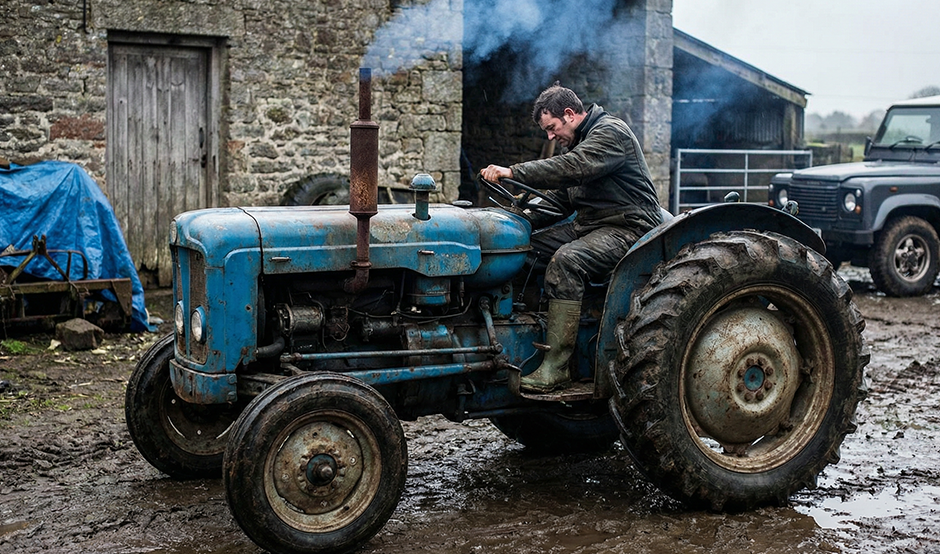
What Causes Blue Smoke from Exhaust?
Blue smoke almost always comes from one of two issues: burning engine oil in the cylinders, or unburned diesel fuel — especially when starting cold. The exact color (often blue‑gray) and when it shows up can help you figure out which one it is. Let’s go over the most common causes for heavy equipment.
The Cold Start Problem: Unburnt Fuel vs. Burning Oil
You need to tell the difference. If a cloud of blue-gray smoke comes out right when you start the engine, but goes away in a minute or two as it warms up, that’s usually just unburned diesel. Diesel engines need high pressure and heat to burn fuel properly. When the engine block and cylinders are cold, there’s not enough heat for full combustion. Glow plugs help, but sometimes they aren’t enough. That fine, unburned fuel just comes out the exhaust as smoke.
But if the blue smoke keeps coming nonstop, or gets worse when the engine is warm or working under load, you’re almost definitely burning engine oil. That’s a much more serious problem and means the engine has internal mechanical wear.
“In a diesel engine, heat is everything. If it’s not hot enough when starting, fuel won’t burn fully — it just becomes smoke.”
A Faulty Glow Plug System
This is the most common reason for heavy blue smoke when starting cold. Glow plugs heat up the combustion chamber so the engine starts smoothly. If this system isn’t working right, the engine can’t burn fuel properly. Common issues include:
- Worn glow plugs: they don’t last forever and lose their ability to heat up enough.
- Bad glow plug relay: it sends power to the plugs. If it fails, voltage drops and the plugs don’t get enough power. Even a small voltage drop means much less heat.
- Bad wiring or connections: corroded or loose cables to the relay can also keep the plugs from getting full power.
Poor Fuel Quality
Not all diesel fuel is the same. A fuel’s cetane rating tells you how easily it ignites under pressure. Lower‑cetane fuel needs more heat to burn cleanly.
In winter, fuel companies change their fuel blends to stop them from gelling, but this often lowers the cetane number. If your smoke gets worse in cold weather, it’s probably from the fuel you’re using. Using a good cetane booster additive usually helps a lot — it makes the fuel burn more fully when the engine is cold.
Worn Internal Engine Components
If the engine continues to smoke after it heats up, it is likely that oil has entered the combustion chamber and is being burned. This is usually caused by long-term use of the engine and wear of internal parts.
- The piston ring or cylinder liner is worn. The piston ring was originally designed to stick to the cylinder wall, which on the one hand prevented engine oil from entering the combustion chamber, and on the other hand ensured that combustion pressure did not leak. Once the wear gets larger, oil can seep through the gaps and be burned.
- There is a problem with the valve oil seal or valve guide. There is a small sealing ring on the valve to prevent oil from flowing into the cylinder from the valve stem. If these seals age and harden, they will not seal properly, and oil can be drawn into the combustion chamber and burned.
Aging Fuel Injectors
Fuel injectors spray fuel into the cylinder as a very fine mist. This is called atomization. Over time, the nozzles can wear out. When that happens, they don’t spray a fine mist anymore. Instead, they may drip or shoot out fuel unevenly. That fuel doesn’t burn well, which can cause blue-gray smoke, rough idle, and worse fuel economy.
A Failing Turbocharger
In turbocharged engines, the turbo can also cause blue smoke. It uses seals to keep engine oil (which lubricates the fast-spinning parts) away from the intake air and exhaust. If those seals fail, oil can leak in and get burned, which leads to thick blue smoke from the exhaust.
A Simple Troubleshooting Checklist for Blue Smoke
Follow these steps in order. This will help you find the real cause without replacing parts you don’t need.
- Try a fuel additive. Before you start taking things apart, use a good cetane booster additive. It’s cheap and can quickly show you if the problem is from bad fuel.
- Use the block heater. If your machine has one, plug it in for a few hours before starting. If the smoke is gone when you start it up, your issue is related to cold starting — most likely the glow plugs or fuel quality.
- Check the electrical system. Test your batteries to make sure they’re strong and hold a charge. Clean the battery terminals and check the main power and ground wires to the glow plug relay. Weak power can cause all kinds of problems.
- Test the glow plug system. Use a multimeter to check for voltage drop in the glow plug relay when it’s on. You can also test each glow plug’s resistance to see if any are bad.
- Get professional help. If simple fixes don’t work, or if smoke still shows up when the engine is warm, you need a deeper check. A mechanic can do an engine compression test to check piston rings and a pop test on injectors to see their spray pattern. This will find serious mechanical issues.
Wrapping Up
If you notice blue smoke, we recommend getting them checked and repaired as soon as possible—problems only get worse and more expensive over time. If fuel, engine oil, or coolant has passed through your DPF system, have those parts inspected or replaced due to contamination. You can find fully compatible parts at FridayParts.
