

Winter work is easier when you have the right blower. This guide explains single-stage, two-stage, and three-stage in simple terms. So you will know how to use a snow blower effectively, choose the right size, where each type works best, and avoid common mistakes—especially if you maintain off-road equipment, yards, lots, or job sites. If you are looking for a broader overview of gear, check out our guide on the Best Snow Removal Equipment for Winter 2025.
What Is a Single-Stage Snow Blower?
A single-stage snow blower has one main moving part (the auger) that does two jobs:
- It pulls snow in.
- It throws snow out through the chute.
The auger usually has rubber edges and touches the ground. That helps it scrape snow cleanly and also helps push the machine forward.
Single-stage units are:
- light and easy to move,
- good for smooth, paved areas,
- best for light snow (often under about 8 inches).
They are not a good match for rough surfaces.
Clear Statement: If you need to clear a paved walkway or a small flat driveway with light snow, a single-stage unit is your most agile option.
What Is a Two-Stage Snow Blower?
A two-stage snow blower splits the work into two steps:
- A metal auger pulls snow in and breaks up packed snow.
- An impeller fan throws the snow out with more force.
The key point: the auger on a two-stage machine usually does not touch the ground. The machine rides on skid shoes, so it can handle bumps better.
Two-stage units are a strong choice when you have:
- deeper snow,
- plow piles at the end of a driveway,
- uneven areas,
- larger driveways, lots, or access roads.
What Is a 3 Stage Snow Blower?
A three-stage snow blower adds one more “helping hand” inside:
- Two outer augers pull snow inward.
- A fast middle “accelerator” chops and feeds snow faster.
- Then the impeller throws it out.
This extra step helps most with:
- heavy, wet slush,
- dense, icy chunks,
- big piles left by plows.
In many real jobs, a three-stage machine can clear faster than a two-stage, especially in messy end-of-driveway snow.
Single Stage vs Two Stage: The Key Differences
Here are the simple differences that matter most:
- Surface Contact: Single-stage augers touch the ground. Two-stage augers sit above the ground.
- Throw Distance: Two-stage machines usually throw farther because the impeller does the throwing.
- Snow Type: Single-stage machines struggle more with wet, heavy snow. Two-stage machines handle packed snow and drifts better.
If you often deal with heavy snow or mixed ice, a two-stage is usually the safer pick. For larger commercial applications, you might also want to compare a Snow Blower Vs. Snow Pusher: Which is Better?
What Size Do I Need?
Size mainly means clearing width (how wide a path you clear each pass). Wider can save time, but it also:
- weighs more,
- needs more storage space,
- needs enough engine power to avoid bogging down.
Common width ranges:
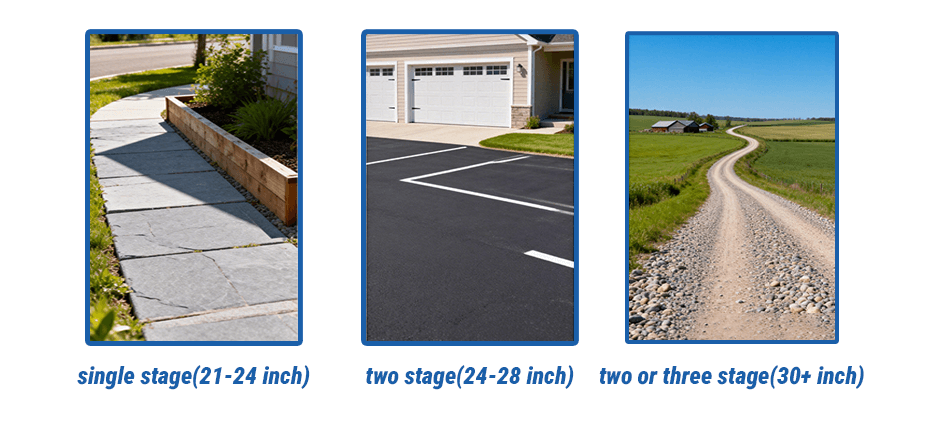
- 21 to 24 Inches: Good for walkways and typical driveways.
- 24 to 28 Inches: Good for medium-to-large driveways and wider work areas.
- 30+ Inches: Best for long lanes, large lots, or heavy, frequent snow.
Tip: Don’t buy a very wide blower with a weak engine. It may slow down or stall in wet snow.
Can You Use a Snow Blower on Gravel Driveways?
Yes—but you must use the right type and set it up correctly.
If you ask, “Can you use a snow blower on a gravel driveway?” the safest answer is: use a two-stage or three-stage model.
Avoid using a single-stage machine on gravel. Because its auger touches the ground, it can pick up rocks and throw them. That can damage property and hurt people.
To clear gravel more safely:
- Choose a two-stage or three-stage blower.
- Adjust the skid shoes on the sides of the housing.
- Raise the front so the auger “floats” about 1 inch above the gravel.
- Go slower on the first few storms to leave a thin base of packed snow (this helps lock gravel in place).
Conclusion
Picking the right stage and width is only step one. Snow blowers work hard in cold weather, so that small worn parts can stop the whole machine. Basic checks help prevent surprises:
- Inspect shear pins,
- Check belts for cracks and slipping,
- Inspect skid shoes for wear,
- Keep fuel fresh and follow your manual for storage.
If you are having trouble getting your machine running after storage, check our step-by-step guide on How to Start a Snow Blower.
For reliable aftermarket replacements to keep your machinery running this winter, explore the wide selection of snow blower parts at FridayParts. From carburetors to ignition coils, we help you keep your property clear and safe.
