

Choosing the correct starter motor shouldn’t be guesswork. Ordering the wrong part wastes time, costs money, and can even harm your equipment. This simple guide explains how to choose the right motor starter by focusing on two things:
- Your engine’s nameplate
- Two key specs — voltage and teeth count
Follow these steps, and you’ll find the right starter on the first try, keeping your machine working longer and stronger.
Why Does the Engine Nameplate Matter?
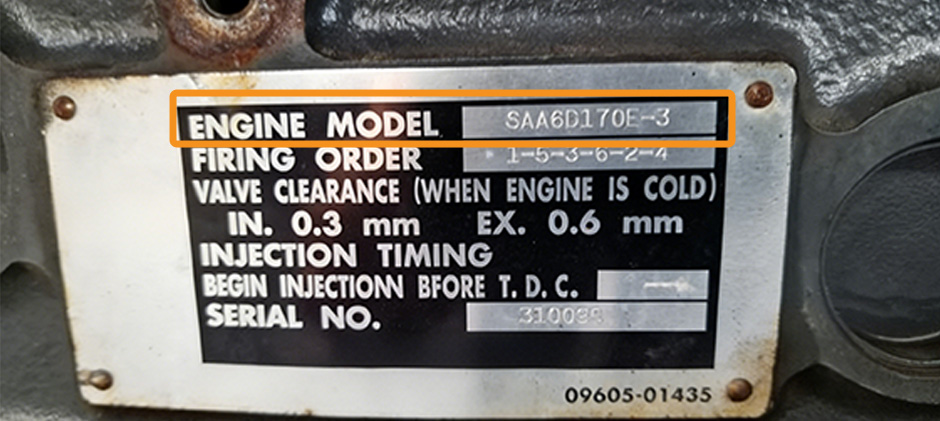
The engine nameplate is the most reliable source of information for parts. It’s a small metal tag on your engine — like its ID card — showing the Engine Model and Serial Number. This info is what parts professionals use to find exact matches in their catalogs. Many machines, even from the same brand or series, can use different engine types. That’s why relying only on the equipment model can lead to wrong parts — but using the engine model number always gets it right.
“Think of the Engine Model on your nameplate as your master key — it unlocks the exact parts list for your machine.”
If you can read the nameplate clearly, you can find almost any part your engine needs.
Two Specs You Must Verify for Your Motor Starter
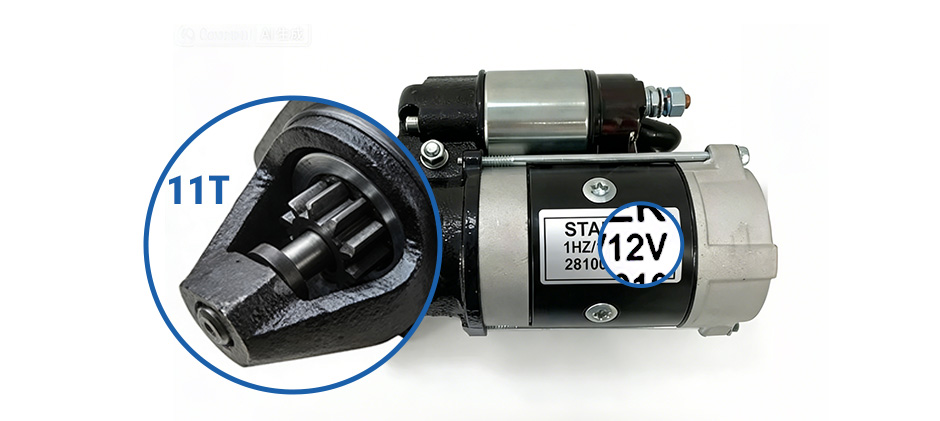
Once you find your engine information, there’s one more check to make before ordering — verify the voltage and teeth count.
These two details confirm that the starter will fit and perform correctly.
Skipping this step can lead to poor performance or even mechanical damage.
How to Check the Voltage
The voltage must match your machine’s electrical system.
- Most small tractors, UTVs, or compact loaders use 12 volts (12V)
- Larger equipment like bulldozers, excavators, and trucks often use 24 volts (24V)
Using the wrong one can break your starter or make it useless:
- 12V starter on a 24V system: It will burn out instantly from too much power.
- 24V starter on a 12V system: It won’t have enough strength to crank the engine.
It’ll sound weak or dead but may not actually be broken.
You can usually find the voltage printed or stamped directly on your old starter.
How to Count the Teeth
The small gear on the starter — called the pinion gear — has a set number of teeth.
These teeth must line up perfectly with the flywheel gear on your engine.
Common tooth counts are 9, 10, 11, or 13, but always count yours to be sure.
If the teeth don’t match, serious problems can happen:
- No engagement: The starter spins, but the engine doesn’t move.
- Grinding or damage: If the gears barely touch, they grind loudly and destroy each other. Fixing a flywheel is much harder and more expensive than replacing a starter.
So, take the time to count them correctly.
A 3‑Step Method for Choosing the Right Starter
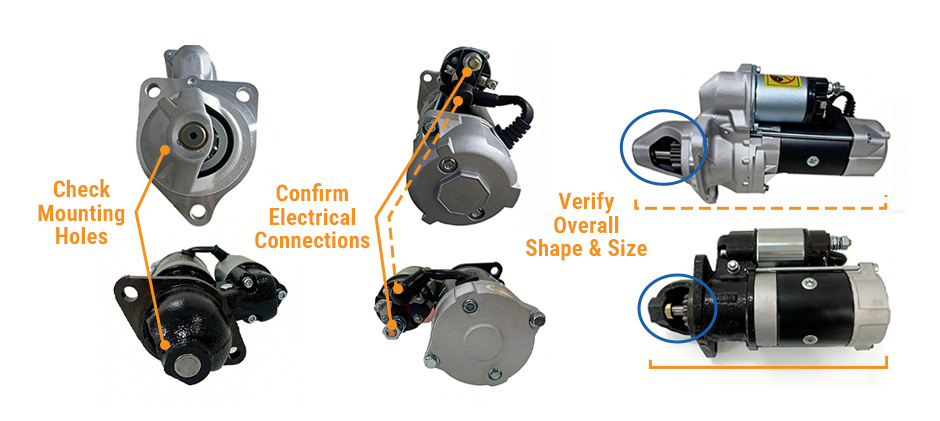
Use this simple 3‑step checklist to make sure you get the right starter every time.
1. Start with the Engine Nameplate
Find the small metal plate on the engine block. Use the Engine Model number as your main reference when searching for parts.
That’s your best source of truth.
2. Verify Voltage and Teeth Count
Before ordering, check your old starter for its voltage rating and count the teeth on the gear. Compare these numbers to the new part’s specs — they must match exactly.
3. Compare with Your Old Starter
When possible, put the new and old starters side by side.
Confirm that the mounting holes, size, and electrical plugs look the same.
This final step helps catch rare variations between engine versions.
Final Thoughts
Choosing the right motor starter is simple once you know what to check — the engine nameplate, the voltage, and the number of teeth. These three details take only a few minutes to verify and can save hours of downtime or costly mistakes.
Now that you know how to pick the right starter motor, you can order with confidence, install it correctly, and get your engine back to work faster — without the headache. Explore FridayParts‘ full selection of reliable starter motors to keep your machines running smoothly season after season.
