

Spark plugs in your vehicles may be so small that you almost neglect their importance in your daily driving. However, it is all these seemingly negligible units that play an integral part in your machine’s overall performance. Regularly checking their condition and replacing them when necessary can save you from unexpected, costly repairs. In this guide, we’ll cover all you need to know about replacing the failing spark plugs. After reading, you can learn the spark plug replacement cost and how you can save.
What Are Spark Plugs?
Spark plugs are small electrical devices located at the top of the cylinder head and serve as an igniter for your gasoline engine. Your gasoline-powered vehicle relies on these gadgets to kickstart the fuel combustion process. To begin with, a mixture of air and fuel is drawn into the cylinder and compressed. Then, the ignition system sends a high-voltage electrical pulse to the spark plug, creating a tiny but intense spark that jumps across a small gap at its tip. As a result, this spark ignites the compressed air-fuel mixture, producing a controlled explosion that powerfully pushes the piston down and generates the power to run your machine. Inside your gasoline engine, this happens thousands of times per minute to deliver sufficient power to turn the engine and move your machines. While a strong, consistent spark is essential for efficient combustion, a weak or inconsistent spark can lead to a host of problems. So, it’s important to check and replace the faulty spark plugs promptly.
Spark Plugs Replacement Cost
We’ve learned what spark plugs are and how they work in your gasoline engine. And it’s critical to perform regular inspections of your spark plugs and make timely replacements to avoid undesirable issues. Now, let’s break down the cost of professional replacement and DIY replacement.
Professional Spark Plugs Replacement Cost
If you turn to a mechanic from a professional repair store, in fact, the cost of spark plug replacement can vary depending on the make and model of your equipment, the type of spark plugs and labor. Professional replacement cost includes the following two aspects.
1. Labor Cost
Labor cost makes up the largest proportion of the total expense in professional spark plug replacement. In North America, labor may cost between $45 and $110 for an ordinary vehicle, given the easily accessible spark plugs. Yet the cost may soar to a frightening high of $160 or even more if your equipment design makes it difficult to access the parts.
2. Spark Plugs Cost
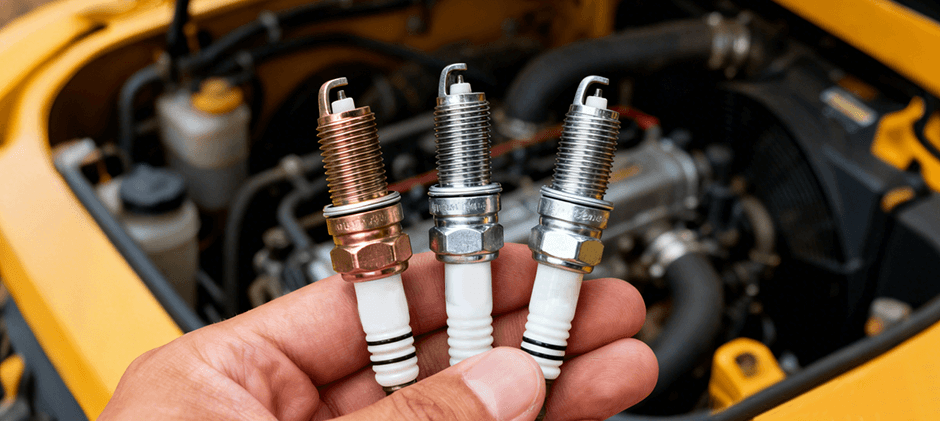
For off-road machinery, copper, platinum and iridium are used for spark plugs. Spark plugs on different models may use different materials. The cost usually depends on the material of the spark plugs you need and whether you choose the OE factory ones. Below is the average cost of OEM parts and quality aftermarket alternatives from brands such as NGK, Denso and Bosch.
| Material | OEM Spark Plug Cost | Aftermarket Spark Plug Cost |
|---|---|---|
| Copper | $2 to $10 each | $2 to $5 each |
| Platinum | $10 to $20 each | $5 to $25 each |
| Iridium | $20 to $100 each | $8 to $30 each |
From above, supposing that your gasoline engine has 4 cylinders and you turn to a mechanic to replace your failing iridium spark plugs with OEM parts, the total cost is estimated between $125 and $560. If you choose to use aftermarket ones, the professional replacement will cost you $80 to $280. However, just as mentioned before, if the model of your engine is rare or the structure is complex, it will cost you more in labor costs.
DIY Spark Plugs Replacement Cost
To save the costs of labor, it is recommended that you replace the faulty spark plugs yourself if you are experienced in mechanics or a DIYer. Unlike in many modern cars, where the spark plugs are buried under the intake manifold, they are more exposed and easily accessible on off-road equipment. So, it is practical to change the bad spark plugs yourself. All you need to do is prepare new spark plugs and tools like a spark plug socket and a torque wrench. Consequently, the average cost of the replacement will be reduced to no more than $100.
Read Warnings Before You Start Replacing Plugs Yourself
1. Do not overtighten. The cylinder head is likely made of aluminum, and its threads can be stripped very easily. A stripped thread is a costly repair. Always thread the new plug by hand first and then use a wrench for the final tightening. If using a torque wrench, follow the manufacturer’s spec.
2. Confirm the Spark Plug Gap. Never assume a new plug is gapped correctly out of the box, especially with aftermarket parts. Use a feeler gauge to ensure the gap matches your engine’s specifications. An incorrect gap leads to poor performance and hard starting.
DIY Replacement vs Professional Replacement
When it comes to replacing spark plugs, you might be indecisive about DIY replacement and professional replacement. The table below can help you make a quick decision.
| Comparison Dimension | DIY | Professional |
|---|---|---|
| Total Cost (4 iridium spark plugs) |
OEM Spark Plugs: $80-$400 Aftermarket Spark Plugs: $30-$120 |
Labour+ OEM Spark Plugs: $125-$560 (even more)
Labour+ Aftermarket Spark Plugs: $80-$280 |
| Tool Requirements | Spec Tools
Needed |
Tools
Not Needed |
| Expertise Requirements |
Required (Improper Installation May Cause Much Loss) |
Not Required |
| Learning Opportunity | YES | NO |
| Convenience | Work On Your Schedule | Nearly No Time Consumption |
Potential Problems of Delayed Replacement of Spark Plugs
If you miss out on replacing your failing spark plugs, it will give rise to several issues and an extra costly loss.
Declining Fuel Economy: Worn-out spark plugs can make the engine work harder, thus consuming more fuel than usual.
Misfires: Failing spark plugs can lead to misfires, posing potential damage to your engine.
Catalytic Converting Damage: Misfire can cause damage to the catalytic converter, a more costly replacement part than spark plugs.
Tips to Save Money on Spark Plug Replacement
1. Change Spark Plugs Yourself
If you are a seasoned pro in mechanics or a DIYer planning your budget, you can choose to replace the faulty spark plugs yourself. This can help reduce the cost of spark plug replacement to a large extent, as the labor costs are the main culprit for the costly repairs. Also, it allows you to select an high-quality aftermarket spark plug at an affordable price. For self-replacement, you can’t be more careful, even though it is a simple job on off-road equipment.
2. Replace the Whole Set of Spark Plugs at Once
This cannot reduce the cost directly, but it benefits you in the long run. If one of the spark plugs within your cylinder head fails, it is likely that others are wearing out. Replacing the entire set of spark plugs at one time can save labor costs and other unexpected losses.
3. Look for Reliable Aftermarket Suppliers
Many aftermarket part suppliers online offer high-quality spark plugs at a better price. And they often provide coupons, promotions and discounts for spark plugs in a pack of 4 or more you need. Once you place an order, they will get your parts shipped to you at a crazy fast speed from the nearest warehouse.
4. Maintain Routine Inspections
Regular inspection can help identify problems promptly. Any faulty spark plug can cause undesirable damage to your gasoline engine, which may lead to costly repairs. Performing regular inspection and maintenance can help you avoid considerable labour costs and downtime costs.
When Should You Replace Spark Plugs?
You may think of how often we should change the spark plugs. This section will tell you the general replacement interval and 5 common symptoms of a bad spark plug.
General Spark Plug Replacement Interval
Unlike cars that use mileage, off-road equipment maintenance is tracked in operating hours. The replacement interval depends heavily on the type of spark plugs and your machine’s operating conditions. Below is the general replacement guideline for your reference.
- Copper Plugs: Every 100-300 operating hours.
- Platinum Plugs: Every 400-600 operating hours.
- Iridium Plugs: Every 800-1,200+ operating hours.
Different engine models may use spark plugs made from different materials. As for the replacement interval, it depends much on the actual condition of your machines. It is recommended to change when there are the following signs of failing spark plugs on your engine.
Signs Your Spark Plug Needs Replacement
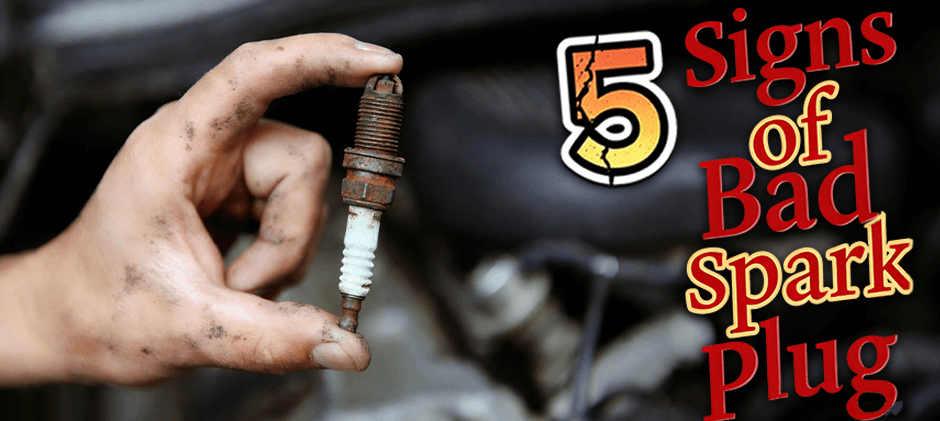
Spark plugs are what deliver power to start your vehicle. Here are the 5 symptoms that bad or worn-out spark plugs will bring about to your engine.
1. Starting Trouble
Is your machine taking longer to crank over at the start of a shift? Worn-out spark plugs often have a wider gap or carbon fouling, which requires more voltage to create a spark. This makes it difficult for your engine to fire up, especially in cold or damp conditions on the job site.
2. Rough Idling
A healthy engine should idle smoothly. If your skid steer or excavator is shaking, vibrating and sounding uneven while idling, it could be the result of a misfire caused by a bad spark plug. The engine is essentially “stumbling” because one or more cylinders aren’t firing correctly.
3. Loss of Power
If your vehicle fails to respond to the throttle when accelerating or struggles to speed up, faulty spark plugs could be the culprit. Insufficient combustion in a cylinder means less power is generated. That means the necessity to examine the spark plugs.
4. Reduced Fuel efficiency
Are you finding yourself refueling your equipment more often than usual? This is a classic sign of worn spark plugs. When the air-fuel mixture isn’t burned completely due to a weak spark, your engine has to consume more fuel to produce the same amount of power.
5. Engine Misfiring & Knocking
If you hear a direct popping, sputtering or stumbling sound from your engine, especially under heavy load, that means you have a broken spark plug or one that has heavily fouled. Also, Engine knocking, occurring as a rattling sound during operation, is indicative of old carbon-fouled spark plugs.
Can I Drive with Bad Spark Plugs?
A faulty or worn spark plug can trigger engine misfires, rough idling and potential damage to the cylinder head. If you can’t replace it immediately and have to do so, drive at a low speed and avoid sudden acceleration.
Summary
An oily spark plug will eventually cause damage to the engine and result in a loss to your wallet. So you’d better replace them at the recommended intervals or immediately when common signs of failing spark plugs occur. As for the spark plug replacement cost, it depends on the type of your equipment, the materials of spark plugs and other factors. Generally speaking, it will cost you $125 to $560 for professional replacement. If you have a tight budget or a DIY passion, you can replace the entire set of spark plugs yourself and use compatible aftermarket spark plugs. To avoid the potential cost of an unplanned breakdown, you can source quality parts in advance from aftermarket parts suppliers and perform regular maintenance.
