

A clogged fuel filter is usually fixed by replacing it, not “cleaning” it. If your machine is losing power, stalling under load, or hard-starting, learning how to unclog fuel filter issues starts with safe diagnostics, draining contamination, and installing the right filter(s). This guide is written for off-road machinery owners who need a clear, practical workflow—especially for diesel equipment with water separators and priming steps.
9 Steps To Unclog Fuel Filter Problems
- Confirm it’s a fuel restriction problem. Check that you have fuel in the tank and that the tank vent cap is not blocked.
- Inspect the water separator first (diesel). Drain the bowl into a clear container and look for water, rust, or black/brown slime.
- Replace the primary filter/water separator element. Install the new seals, lubricate O-rings with clean fuel, and tighten to spec (hand-tight plus the recommended turn).
- Replace the secondary (final) fuel filter if equipped. Treat this as part of the same repair because debris often reaches both.
- Clean any serviceable screen pre-filter you can access. Rinse a metal screen with clean fuel and reinstall it only if it’s undamaged.
- Check visible fuel lines for kinks and rubbing. A “clog” can be a collapsed hose or a pinched line.
- Prime the system using the machine’s procedure. Use the hand primer or key-on prime cycle until resistance changes or the pump note stabilizes.
- Bleed air if your system requires it. Crack the specified bleed screw(s) until fuel flows without bubbles, then retighten.
- Test under load and recheck for leaks. Run at varying RPM and apply a real load to confirm fuel delivery is stable.
“Don’t chase power issues until the filter and air are handled.”
9 Symptoms Of A Clogged Fuel Filter
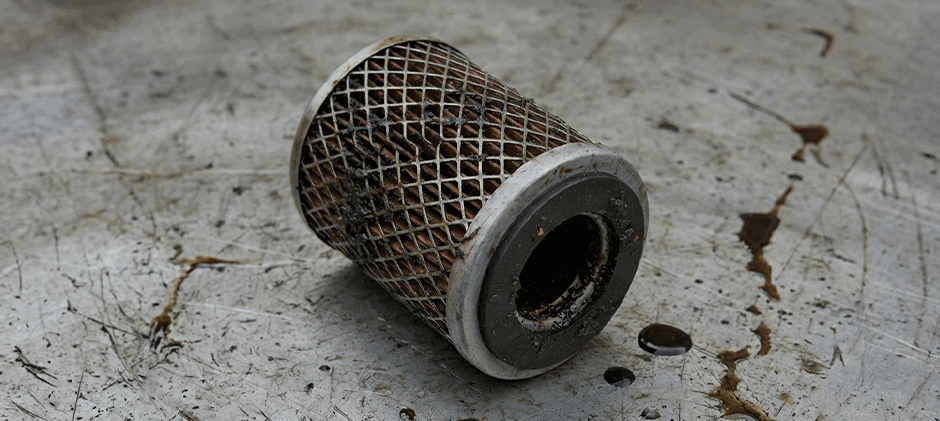
- Power loss under load is the most common sign. The engine may run fine at idle and then fall on its face when you push the hydraulics, climb a grade, or spin a mower.
- Hard starting is a common sign. The engine may crank longer because fuel flow cannot keep up.
- Surging at a steady throttle is a common sign. The engine may “hunt” as fuel pressure drops and recovers.
- Stalling is a common sign. The engine may die when you raise the RPM or demand torque.
- Smoke changes can be a sign. Diesel engines may smoke differently when fueling becomes inconsistent.
- A loud or strained lift pump can be a sign. The pump may sound different when it’s working against a restriction.
- Low fuel pressure codes can be a sign. Many newer machines log fuel rail pressure or supply pressure faults when the filter is restricted.
- Air bubbles in a clear line can be a sign. A restriction can aggravate tiny leaks that pull air into the system.
- A full water separator bowl can be a sign. Water and sludge often show up there first.
Clear Statement: If the symptom disappears with a new filter, the “clog” diagnosis was correct.
Why Does A Fuel Filter Get Clogged?
- Dirty fuel is the #1 cause. Jobsite cans, farm tanks, and dusty fueling habits introduce debris that filters must catch.
- Water is a major cause in diesel systems. Condensation and poor storage let water collect, which can rust tanks and grow microbes.
- Diesel algae (microbial growth) can be a major cause. Microbes create slime that plugs filters fast and repeatedly.
- Tank sediment is a hidden cause. Old tanks shed rust and scale that re-contaminate new filters.
- Cold weather can be a cause. Waxing/gel in diesel can mimic a “diesel fuel filter clogged” situation.
“If a new filter clogs again quickly, the problem is upstream—fuel, tank, or lines.”
When To Replace Instead Of Unclogging?
- Replace the filter if it is a paper or sealed element. Most spin-on and cartridge filters are not meant to be cleaned.
- Replace the filter if you suspect microbial slime or heavy water contamination. Cleaning the element rarely restores full flow and often leaves debris behind.
- Clean only serviceable pre-filters and screens. Sediment bowls, metal mesh screens, and tank pickup socks (where accessible) can sometimes be cleaned as a temporary get-you-home step.
Clear Statement: “How to clean a fuel filter” is often the wrong question—“how to restore fuel flow safely” is the right one.
What To Do Before Touching The Fuel System?
- Work safely around fuel. Shut the machine down, let hot surfaces cool, and keep ignition sources away.
- Relieve pressure if your machine is a high-pressure common rail. Follow the OEM procedure because modern diesel fuel systems can remain pressurized.
- Clean the area before opening anything. Dirt falling into an open filter head can create the next clog.
- Capture and dispose of fuel properly. Use a drain pan and follow local rules for contaminated fuel and oily rags.
What Tools And Parts Do You Need?
The right parts prevent repeat work. Have the correct primary/secondary filter(s) and O-rings on hand before you start.
Basic tools reduce mess and damage. A filter wrench, line wrenches (if applicable), clean diesel/gas for prefill (only if OEM allows), shop towels, and nitrile gloves are usually enough.
A priming method matters. Some machines have a hand primer, some use an electric lift pump prime cycle, and some require manual bleeding.
How To Prime And Bleed After Service?
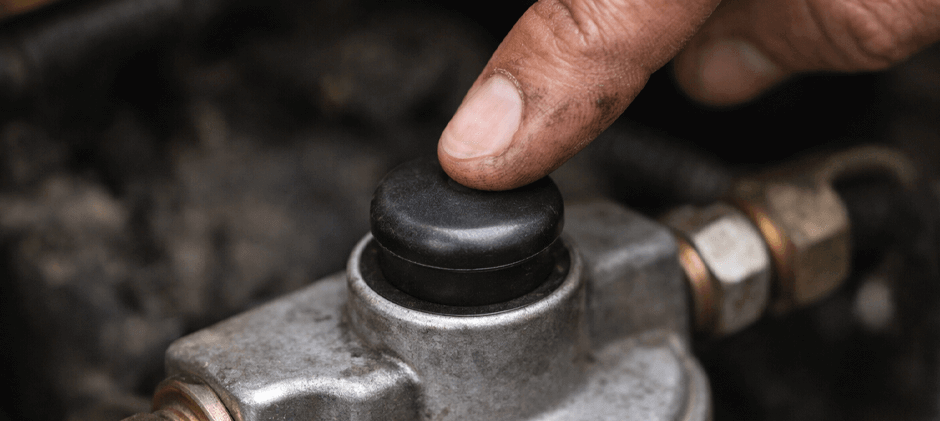
Priming removes air so the engine can start and stay running. Air pockets can imitate the same symptoms as a clogged filter.
How To Prime With A Hand Primer Pump?
Pump until you feel firm resistance. Many systems go from “soft” strokes to “hard” strokes as air is purged.
How To Prime With An Electric Lift Pump?
Cycle the key to run the pump without cranking. Use the OEM prime mode if available and wait for the pump to stop or change tone.
When To Crack A Bleed Screw?
Bleed only where the OEM allows. Some systems are self-bleeding, while others require a specific bleed port.
Clear Statement: If it starts and then dies repeatedly, you likely still have air or a continuing restriction.
7 Mistakes That Make Clogs Worse
- Blowing compressed air through a paper filter. This can tear media and send debris downstream.
- Over-tightening spin-on filters. This can deform seals and create air leaks.
- Reusing old O-rings. A tiny suction leak can cause hard-starting and surging.
- Letting dirt fall into the filter head. One gritty refill can become the next “fuel filter clogged” complaint.
- Ignoring the tank vent. A plugged vent can cause vacuum and fuel starvation.
- Prefilling when the OEM forbids it. Some systems risk contamination if you pour unfiltered fuel into the clean side.
- Replace only one filter in a two-filter system. A plugged secondary filter can keep symptoms alive.
How To Prevent Future Fuel Filter Clogs?
- Clean fueling prevents most clogs. Use clean cans, filtered transfer pumps, and keep caps and funnels sealed.
- Drain water separators on a schedule. Water control reduces rust and microbial growth.
- Store fuel correctly. Keep tanks full to reduce condensation and use stabilizers/biocides when appropriate for diesel storage (per product instructions).
- Change filters proactively. A planned replacement is cheaper than a stalled machine in the field.
Final Thoughts
Most “how to unclog fuel filter” jobs are solved by replacing the filter(s), draining contamination, and priming the system correctly. If your off-road machine is starving for fuel, use the symptom checks, follow the step-by-step workflow, and fix upstream contamination to prevent repeat clogs. When you’re ready to restore reliable flow with the right fit and specs, shop FridayParts for a quality replacement fuel filter that matches your machine and workload.
