

During winter construction work, you can’t get around the safety and control issues that come with icy, snowy roads. Snow tires vs tire chains? That’s the big question for every equipment operator and fleet manager. Both boost traction, but they work way better in different conditions. Let’s break this down from a real-world use angle, so you can pick the best option for you.
What Are Snow Tires?
Snow tires (or winter tires) are for freezing weather. The main difference is the rubber itself. Regular or all-season tires get hard and stiff when it’s cold—so they can’t grip the road worth a dime. But snow tires use a special rubber mix with lots of silica. It stays soft and flexible even when temps drop way low, letting the tire hug the ground tight for better traction. The tread design is also made just for winter. Here’s what to look for:
- Deeper tread grooves: Way bigger than regular tires. They flush out tons of slush and water, so you don’t hydroplane and keep in touch with the road.
- Beefy tread lugs: The tread blocks are big and spaced out. They dig into deep snow and fling it out as the tire spins—so the tread doesn’t get packed with snow and stop working.
- Tiny sipes: These are thousands of sharp little slits in the tread blocks. On ice, they flex open and create tons of tiny “biting edges” that grab the ice. Regular tires can’t touch that kind of control.
What are Tire Chains?
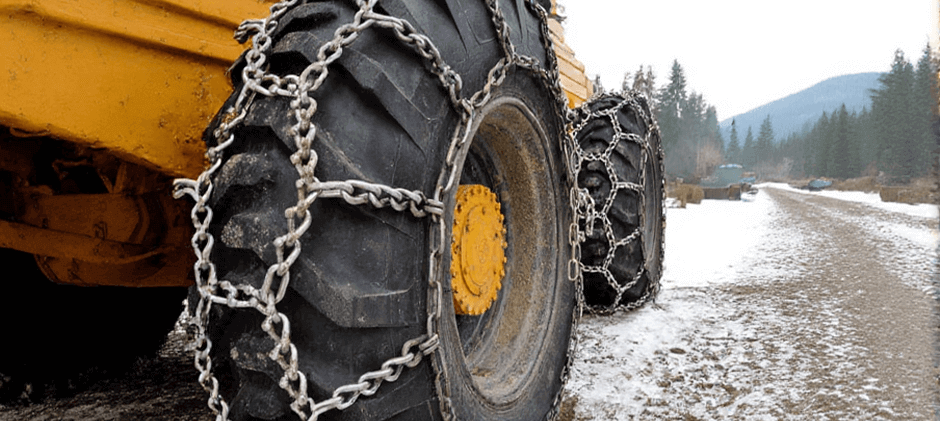
Tire chains are the old-school, no-nonsense fix for when you need serious traction. Heavy-duty chains made from tough boron steel or titanium alloy. They’re built to handle the machine’s massive weight and torque. Just drape ’em over the tires and strap ’em tight. The metal links dig right into ice and packed snow. They give you a solid, physical grip—something rubber tires alone can’t do when they’re just spinning uselessly. For heavy equipment, chains usually come in a couple of styles:
- Ladder style: The most basic kind. Cross-links run straight across the tire tread. Great for moving forward and backward, but not so hot for a sideways grip.
- Diamond (or H) pattern: Makes a net-like cover over the tire. That way, part of the chain is always touching the ground. You get way better, steady traction—and more control when you turn.
Chains are your best bet for the absolute worst conditions: thick ice, rock-hard frozen ground, or climbing steep, snow-covered slopes on the job site. Use ’em when you have to have grip.
Snow Tires vs. Snow Chains: Which Are Better?
Snow tires are real tires, while snow chains are accessories —metal chains— wrapped around the tire. They all serve a similar purpose of protecting safety. However, both types of tire protection have their own advantages and disadvantages.
The Pros and Cons of Snow Tires
Pros
- Performance: Snow tires work like a charm in all kinds of winter weather. If you drive on everything from deep snow and light flurries to cold, bare roads, they give you a steady grip—no need to take them off and on.
- More comfortable: Chains rattle and shake like crazy, making you tired after a long workday. Snow tires let you ride smoothly and quietly, so you can stay focused and get more done.
- Faster work speeds: You can run your machine almost as fast as usual with snow tires. With chains, you’re stuck crawling (usually under 5 mph / 8 kph) to avoid breaking anything.
- Less damage to roads: Steel chains scratch and gouge delicate surfaces like new asphalt or decorative concrete. Snow tires are rubber, so they’re way gentler.
Cons
- Super expensive upfront: A full set of snow tires for big equipment costs a ton—often thousands of dollars. It’s a huge chunk of cash to spend at once.
- Hassle to store and swap: These tires are big and heavy. You need a dry, dark spot just for storing them when they’re not in use. Switching between tires also needs heavy jacks and special tools—it’s slow and takes a lot of work.
- Not the best on pure ice: They’re way better than regular tires on ice, but they can’t beat the raw grabbing power of steel chains on a sheet of solid ice.
The Pros and Cons of Snow Chains
Pros
- Unbeatable traction in the worst conditions: On thick ice or packed-down deep snow, chains are king. They dig in and give you the grip you need to push, pull, and climb—places where tires would just spin uselessly.
- Cheaper to buy at first: A good set of chains costs way less than a full set of snow tires. It’s a much more affordable pick if you’re on a budget.
- Easy to store and use with existing tires: You can put chains on your regular all-season or all-terrain tires whenever you need them. When you don’t, they take up way less space than a whole set of tires.
- Surprisingly great in mud: Bonus win: The same thing that makes chains work in snow—their tough, digging links—also makes them awesome for getting through deep, slippery mud.
Cons
- A pain to put on: Fitting heavy, bulky chains onto giant tires in freezing, wet weather is hard and even a bit dangerous. It’s tiring work, and you need practice to do it safely and correctly.
- Strict speed limits: as we said before, you have to drive super slow with chains. Going fast can make a chain break—and a flying broken chain can wreck your machine’s fenders, hydraulic lines, or even the tire itself.
- Can’t use on clear roads: Driving with chains on bare pavement ruins both the chains and the road in no time. You have to take them off as soon as you hit a cleared area, which slows you down a lot.
- Rough, bumpy ride: Chains make the ride super jarring. It’s not just uncomfortable for you—it also puts extra wear and tear on your machine’s suspension and frame over time.
Snow Chain and Tire Maintenance
After each use, scrub off salt, mud and grime with a stiff-bristle brush and clean water. Before storing them, check every link for wear, cracks or warping. Let them dry completely, spray on some rust inhibitor, then keep them in a dry spot. Ensure the links are neatly arranged so they’re ready to use when the next snowstorm hits. The main upkeep is seasonal swapping. The best place to store them is indoors—somewhere cool, dry, and out of direct sunlight.
Conclusion
When it comes to snow tires vs. tire chains, there’s no one-size-fits-all answer. Your final call depends on your work habits, where you operate, and what you actually need. Chains deliver unbeatable traction in extreme conditions—they’re perfect for off-road machinery. FridayParts also offers a wide range of winter-ready parts, so your winter jobs keep running smoothly from start to finish. Come check ’em out!
