

Your Toro won’t start usually because it’s missing fuel, spark, or a safe “start” condition. The fastest win is usually fuel: gas left from last season can turn stale and clog the carburetor. This short guide explains why my Toro snow blower won’t start, what to check first, and how to fix the most common no-start causes before snow (or work) piles up.
“Air + Fuel + Spark = Run. If one is missing, the engine stays silent.”
3 Main Reasons Your Engine Fails to Start
1. Fuel Delivery Fails Most Often
Bad fuel blocks the carburetor. Stale gasoline can leave sticky varnish that plugs tiny jets, so the engine gets air but not enough fuel.
2. Spark Goes Missing
A weak ignition stops combustion. A worn spark plug, loose plug wire, or a faulty ignition coil can make the engine crank but never fire.
3. Safety Parts Block Starting
A simple safety issue can shut everything down. If the plastic ignition key is not fully in, or the fuel valve is OFF, many Toro units will not start as designed. For a complete walkthrough on proper starting procedures, check our guide on how to start a snow blower.
Clear Statement: Most no-start problems are simple checks, not big repairs.
Is It a Fuel Problem?
Old Gas Is The #1 Clue
Old fuel causes hard starts. Ethanol fuel can absorb moisture and break down during storage, leaving water and gunk in the carburetor bowl.
Starting-Then-Dying Points To The Carburetor
A clogged main jet is a common culprit. If it fires for one second on starting fluid and dies, fuel is not flowing through the carb.
Clear Statement: If it ran fine last winter and won’t start now, suspect stale fuel and a dirty carburetor first.
How Do You Check Spark Fast?
The Spark Plug Tells A Simple Story
A quick look can save time. Remove the plug and check the tip: black/sooty often means it’s dirty; wet can mean flooded; cracked parts mean replace it. You can learn more about how to clean a spark plug if it just looks dirty.
A Spark Test Confirms Ignition
A blue snap means the system is working. Reconnect the plug to the wire, touch the metal threads to bare engine metal, and pull the cord—look for a strong blue spark.
“No spark, no start.”
What Should You Check If The Electric Start Won’t Engage
Power Is Often The Problem
Most Toro starters are 120V plug-in types, not battery-operated. Confirm your extension cord is heavy-duty and the outlet is live before blaming the machine.
A Stuck Gear Can Stop Cranking
A jam can make noise but not spin the engine. If you hear a hum but the engine doesn’t turn, the starter drive gear may be stuck and may need service.
6 Steps to Troubleshoot A No-Start
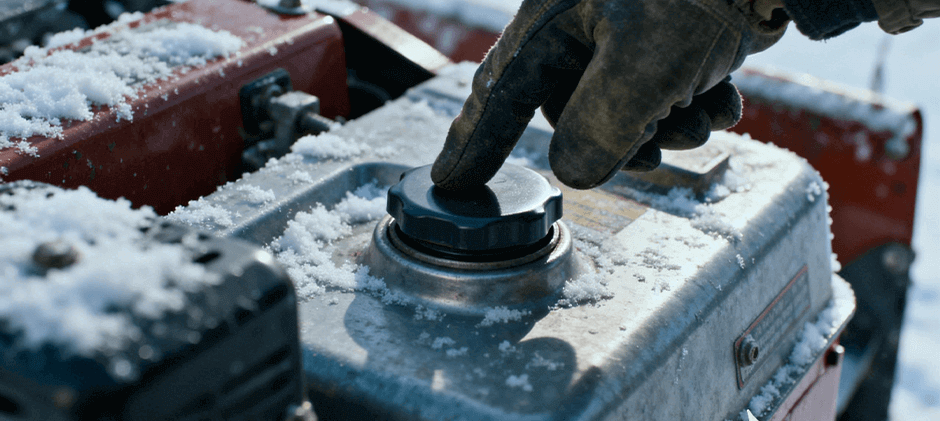
Step 1: Check The Key And Controls.
The ignition key must be fully seated. Also, confirm the fuel valve is ON (Open), and the choke/throttle are set to a normal start position.
Step 2: Check Oil Level.
While most residential models won’t shut off due to low oil, running dry will destroy the engine. Always check the dipstick before troubleshooting.
Step 3: Drain Old Fuel And Add Fresh Fuel.
Fresh fuel removes a major variable. If the gas is older than a month or smells sour, drain it and refill (a stabilizer helps for storage).
Step 4: Prime Correctly.
Priming should feel firm. Press the primer 3–5 times; if the bulb is cracked or stays “empty,” it may not push fuel.
Step 5: Clean The Carb Bowl Nut/Main Jet.
A tiny hole can stop the whole machine. On many Toro carbs, the bowl bolt also acts like a main jet—remove it, spray carb cleaner through the center and side holes, and gently clear with a thin wire. See our detailed guide on how to clean a snow blower carburetor for step-by-step instructions.
Step 6: Replace The Spark Plug If You’re Unsure.
A new plug is a cheap test part. It’s often faster than guessing, and it removes “weak spark” from the list.
When Should You Replace Parts Instead Of Cleaning?
Heavy Corrosion Usually Means “Replace.”
White crusty corrosion inside the carb is a bad sign. Cleaning may not restore smooth fuel flow if passages are pitted.
Time Matters In Winter.
A swap can be faster than rebuilding. If you need the machine running for property access or job-site clearing, replacing a failed plug, belt, or carb can be the practical move.
“Fix the simple thing first, then replace what’s truly bad.”
Final Words
Start with the basics—fresh fuel, clear carb passages, strong spark, and correct safety settings—and you can solve most cases of why won’t my Toro snow blower start in minutes. If you confirm a worn spark plug, a fuel-related carb issue, or other common wear items, you can browse compatible snow blower parts at FridayParts (with clear photos and fitment across many brands, including Toro) to get your machine ready before the next storm.
