

Using the wrong chainsaw bar oil weight can affect your cutting performance, shorten your chainsaw’s life and even bring about costly maintenance and repairs. Thinner oils like SAE 10W are ideal for cold weather operation and softwood cuts, while thicker oils like SAE 40W are better for hot temperatures and hardwoods. In this guide, we’ll dive into more than just different chainsaw bar oil weights and how to choose the right one for your specific needs.

What Is Chainsaw Bar Oil?
Chainsaw bar oil is a special lubricant. It reduces the friction between the chainsaw bar and chain by forming a protective layer. Besides, chainsaw bar oil can also reduce heat buildup during operation, preventing the bar and chain from overheating or warping. Proper lubrication with bar oil keeps your chainsaw cutting smoothly and prevents early wear.
Key Benefits of Bar Oil
Using chainsaw bar oil delivers many benefits:
- Extend the lifespan of your chain and bar
- Deliver better cutting performance
- Lower maintenance costs
- Protect from rust and corrosion
- Smoother and safer operation
- Improve cooling performance
Applying dedicated bar oil for chainsaws is essential to maintain proper viscosity and lubrication for safe and efficient operation, experts once said.
What Are Types of Chainsaw Bar Oil?
A good bar oil makes all the difference in your chainsaw’s performance. You must pick the right one by understanding the types, features and ideal uses of each bar oil. The table below shows you common types of chainsaw bar oils.
| Bar Oil Types | Benefits | Limitations |
|---|---|---|
| Petroleum-Based Bar Oil |
|
|
| Vegetable-Based Bar Oil |
|
|
| Synthetic Bar Oil |
|
|
What Is Chainsaw Bar Oil Weight?
Oil weight refers to viscosity measurements that indicate the oil’s flow characteristics and its performance under different temperatures. Simply put, oil weight indicates how thick or thin an oil is. Thicker oils have higher weight ratings, while thinner oils receive lower weight designations. Understanding the oil weight helps select appropriate lubrication for specific conditions.
Common Bar Oil Weight Ratings
Different chainsaw uses require specific bar oil weights. So, understanding the available options helps optimize your chainsaw’s performance. The table below shows you the characteristics, usage and pros & cons of common chainsaw bar oil weight ratings.
| Bar Oil Weights | Characteristics | Usage | Advantages | Disadvantages |
|---|---|---|---|---|
| SAE 10 | Thin consistency flows easily at low temperatures | Operations below 40°F, light cutting tasks | Excellent cold-weather flow, reduced power consumption for oil pumps | Can be too thin in hot conditions, limited high-temperature protection |
| SAE 20 | Medium viscosity balances flow and protection | Moderate temperature, general cutting operations | All-around performance, suitable for most chainsaw applications | Can thicken in extreme cold, can thin in very hot conditions |
| SAE 30 | Thick consistency provides excellent lubrication | Hot operations, heavy-duty cutting with professional chainsaw | Superior high-temperature protection, excellent wear resistance | Poor cold-weather flow, increased oil pump workload |
| SAE 40 or Higher | Very thick oil for extreme conditions | Continuous heavy-duty operations, extremely hot climates | Maximum protection under severe conditions, extended equipment life | Difficult cold starting, requires robust oiling systems |
| Specialized Cold-Weather Oils | Engineered for sub-freezing operations | Winter cutting operations, cold climate professionals use | Reliable flow at extremely low temperatures, consistent lubrication | Higher cost, limited availability, can thin excessively in warm weather |
Why Bar Oil Weight Matters for Chainsaws?
Chainsaw bar oil weight can make all the difference in running your chainsaw smoothly. Using the wrong oil weight can lead to the following problems:
- Rough chain movement
- Overheating
- Premature wear and tear
The temperature you are working in determines the oil weight for your chainsaw bar. Thinner oils, such as SAE 10W, are ideal for cold weather, as they flow easily and keep your chainsaw parts lubricated properly to prevent damage. However, they might not be strong enough on scorching days. Thicker oils like SAE 30W are better for hot weather. If you use them in winter, they can become too thick and slow. Therefore, it’s essential to use the correct weight of bar oil for optimal lubrication, efficient cutting, extended service life and improved safety during operation.
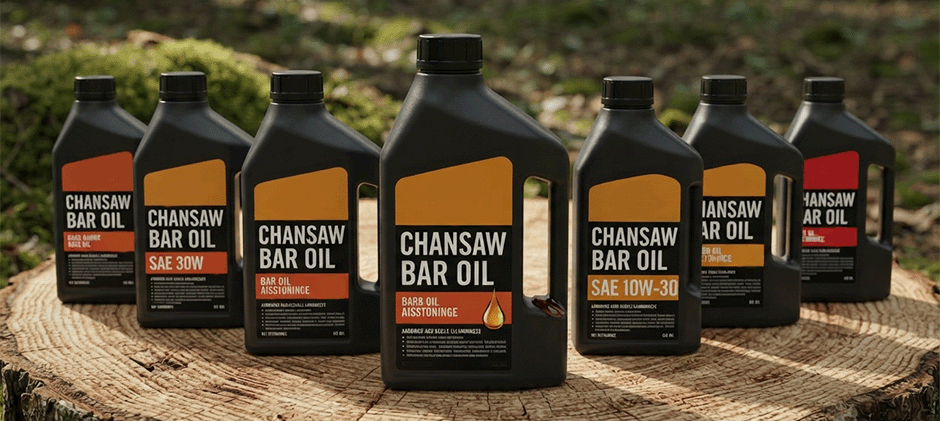
How to Choose the Right Chainsaw Bar Oil Weight?
Choosing the right chainsaw bar oil is straightforward. You should consider the following factors:
Climate and Temperature
As mentioned above, temperatures affect how well your bar oil works for your chainsaw.
- If you work in a cold climate below 32°F/0°C, use thinner bar oils like SAE 10W for easier starting and flow
- If you operate in hot climates above 90°F/32°C, choose thicker oils like SAE 40W for sustained lubrication
- For mild climates between 32°F/0°C and 90°F/32°C, use medium-weight oils like SAE 30W for balanced performance across varying temperatures.
Types of Wood
Different types of wood you cut require different chainsaw bar oil weights.
- If you cut softwoods like pine and spruce, you can select thinner oils like SAE 10W for easier cutting and less residue. A lower oil viscosity can reduce resistance and prevent being entrapped in the wood’s small pores.
- If you work with hardwoods like oak and maple, choose thicker bar oils like SAE 30W for increased lubrication and wear protection. More thickness helps to fight against the extra rubbing and heat from cutting through tough woods, ensuring cleaner cuts with less wear and tear.
- If you deal with resinous woods such as cedar and redwood, you may need specialized bar oils or additives to combat sap and residue. These types of bar oils can break down and mix with the sap, keeping your chainsaw from getting sticky. Usually, they are labeled “resin-friendly” or “sap-resistant”.
Tips for Storing Your Chainsaw Bar Oil
Storing bar oil correctly can prevent contamination, extend shelf life and ensure optimal performance of your chainsaw. Always remember to store it in a cool, dry place away from sunlight, moisture and heat. Next, keep it in a tight container and then store the container upright to prevent leakage. Also, keep the bar oil away from kids and pets to avoid accidental knockover or spilling. At last, label the container with the date and usage, helping you remember what it is and how old it is.
Wrapping up
The chainsaw bar oil weight refers to the viscosity of the oil. Understanding the viscosity, temperature, and wood type you will deal with affects how well your chainsaw can perform. Using the wrong type of bar oil and bar oil weight can lead to reduced performance, increased wear and tear, as well as costly maintenance and repairs. At FridayParts, you can explore a vast range of quality chainsaw replacement parts for your Husqvarna, Stihl, DeWalt and other reputed chainsaw brands.
