

What Is A Differential & How Does A Differential Work?
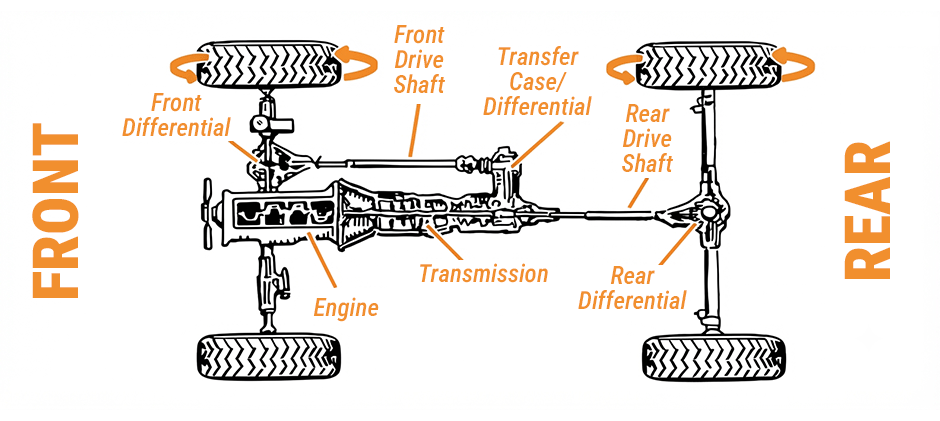
A differential is the driving-axle gear assembly located in the center housing between the driving wheels on rear-wheel drive vehicles, or as part of the transaxle on front-wheel drive vehicles or between front and rear differentials on all-wheel drive vehicles. Its major job is to transmit power to the wheels while allowing each wheel to rotate at different speeds. If they both always move at the same speed, you would end up damaging your tires and possibly other mechanical parts. In modern 4WD/AWD vehicles, there are usually three sets of differentials: front diff, rear diff and center diff.
What Is A Rear Differential?
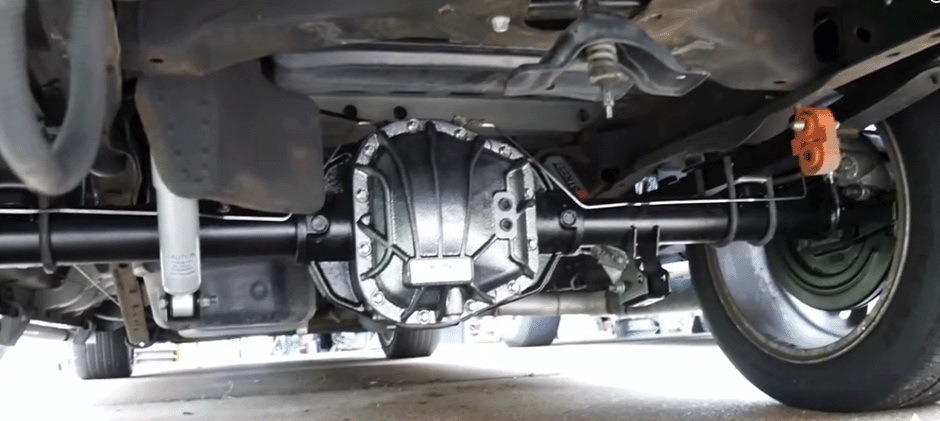
 The rear differential (rear diff) is a crucial part of the rear axle in rear-wheel drive (RWD) and all-wheel drive (AWD) vehicles. It delivers the engine torque to the rear wheels while allowing the left and right rear wheels to rotate at different speeds when turning a corner. The rear differential has several gears and bearings that have to handle a lot of torque, especially in trucks and RWD sports cars. Over time, these gears and bearings wear out, and gear oil becomes contaminated with metal shavings. So, it is essential to change the gear oil regularly to extend the life of the differential.
What Is A Front Differential?
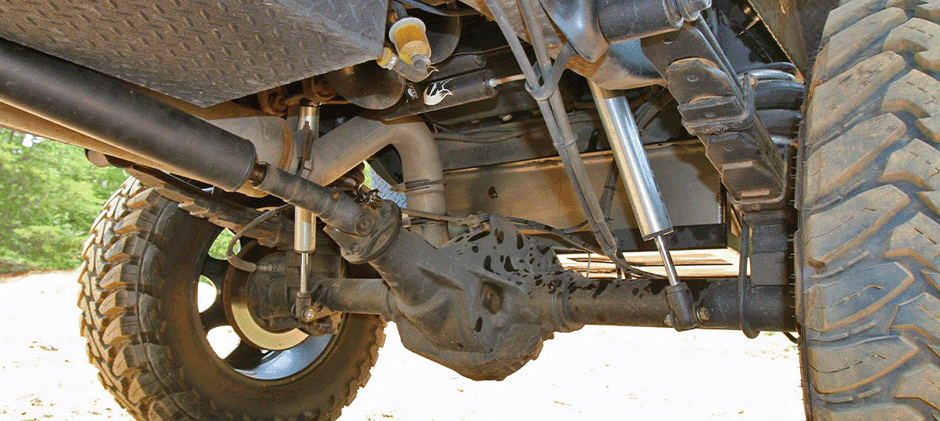
The front differential (front diff) performs the same function as the rear diff. It delivers the torque to the front wheels even when they rotate at different speeds while turning. Most modern cars and SUVs have a front diff built into the transmission, aka transaxle. So, there is no need to change the fluid separately because it’s lubricated by the transmission fluid. However, many 4WD trucks and some Subaru vehicles have a separate front differential.
What Is A Center Differential?
The center differential (center diff) is a component in 4WD and AWD systems that distributes power between the front and rear axles. It allows the front and rear wheels to rotate at different speeds during cornering. When your vehicle turns, the front and rear axles travel different distances, so they need to rotate at slightly different speeds. That’s where the center differential makes a difference. It helps avoid forcing the front and rear axles to rotate at the same speed, thus minimizing the drivetrain stress and possible damage. In simple words, a center differential serves to allow the front and rear axles to rotate at different speeds instead of allowing left and right wheels to rotate at different speeds as the front or rear diff does. Some vehicles use a locking center diff to improve traction in slippery conditions.
Front vs Rear Differential
| Items | Front Differential | Rear Differential |
|---|---|---|
| Locations | Front Axle | Rear Axle |
| Main Function | Distribute power to front wheels while allowing the left and right wheels to rotate at different speeds | Delivers power to the rear wheels while allowing the left and right wheels to rotate at different speeds |
| Common Applications | FWD, 4WD, AWD vehicles | RWD, 4WD, AWD vehicles |
| Power Source | Connected to transmission (FWD) or transfer case/PTU (AWD/4WD) to deliver power to front wheels | Connected to the driveshaft to receive power from the transmission |
| Design Features | More compact; often integrated with transaxle in most front-wheel-drive vehicles | Installed separately in the rear axle housing and designed for higher torque |
| Steering Role | Allows the front wheels to rotate at different speeds during cornering | Mainly transfers power and does not directly control steering |
| Torque load | Depends on vehicle type; generally lower in FWD vehicles and higher in AWD systems | Handles higher torque loads, especially in RWD and performance vehicles |
| Common Features | Usually paired with open differential, LSD, or locking differential options | Commonly paired with LSD or electronic locking differential |
| Advantages | Improve maneuverability and provide smoother cornering | Provides efficient power transfer and better traction for performance/off-road applications |
Why Is It Nice to Lock the Differential?
While in general driving you want your wheels to be able to spin independently for comfortable turning, a loss of traction can happen in some cases. If one wheel slips on ice or wet ground, the differential may continue sending power to that wheel, causing it to spin, while the wheel that has not slipped may have less power. Also, if one wheel gets stuck but the other is free in mud or over rocks, the differential might continue sending power to that wheel, making it spin wildly, while not really getting you out of the mud.
Whether automatic or activated by the driver, the powered wheels can be united, allowing drivers to have better traction. This can be extremely helpful either for getting out of mud and snow, climbing rocks on the trail, or maintaining traction in a snowstorm.
While a driver shouldn’t keep their differential locked in highway driving, it can be very useful when off-roading or in some high-performance driving situations. Some off-road models like GMC Sierra and Chevy Silverado feature locking differentials.
Open Differentials vs Locking Differentials
Open differentials are designed to allow wheels on the same axle to rotate at different speeds, which improves handling and reduces tire wear during normal driving. However, this design becomes a disadvantage in off-road conditions because torque is limited by the wheel with the least traction.
Locking differentials solve this problem by mechanically connecting the wheels together, forcing them to rotate at the same speed. When one wheel loses traction, the other wheel can still receive torque and continue moving the vehicle forward.
With front and rear differential locks engaged, a 4×4 vehicle can deliver power to all four wheels regardless of traction differences. This setup provides maximum off-road capability, especially in mud, sand, rocks, and uneven terrain.
Wrapping up
The role of differentials is to allow the wheels on the same axle to rotate at different speeds. This is particularly important in turns, as the outer wheels need to rotate faster than the inner wheels, since they have a greater distance to cover in the same amount of time. Without a differential, the inner wheel would lose traction and could cause the vehicle to skid. The tyres and drivetrain would be under high stress, not to mention the loss of control in corners. At FridayParts, you can source a vast selection of quality differential parts, including rear differentials, front differentials and more.
You Might Also Like
Got a Rear Differential Leak? A Guide to Symptoms, Causes, and Fixes
