

Have you ever sent your leaking cylinder to a technician for a new cylinder seal kit? But it returned leaking again a month later. In fact, that’s not where the problem is. A worn bore or a scored rod was the main culprit. Every excavator owner has to make the reseal vs. rebuild decision on almost every hydraulic cylinder. A cylinder reseal that should have been a rebuild comes straight back; a cylinder rebuild where a reseal would have done wastes your money. In this guide, we’ll help you diagnose a hydraulic cylinder properly and what it actually needs, based on the condition of the three things that matter: the bore, the rod and the seals.
Hydraulic Cylinder Reseal or Rebuild: What’s the Difference?
A reseal and a rebuild are two different depths of hydraulic cylinder repair. A cylinder reseal renews only the sealing elements inside the cylinder, including the piston seal, rod seal, wiper, wear rings, and static O-rings. During this process, the barrel, rod, piston and end cap are cleaned, inspected and refitted as they are. Conversely, a cylinder rebuild is a complete overhaul. The process involves stripping the cylinder to its bare components, honing the bore back to a true finish, rechroming or replacing the rod, renewing the worn bushes and glands and changing the seals in this rebuilding process. Choosing correctly is the difference between a cylinder that runs for another five years and one that leaks again within weeks. Shop for quality cylinder barrels and piston rods here.
How to Diagnose A Hydraulic Cylinder?
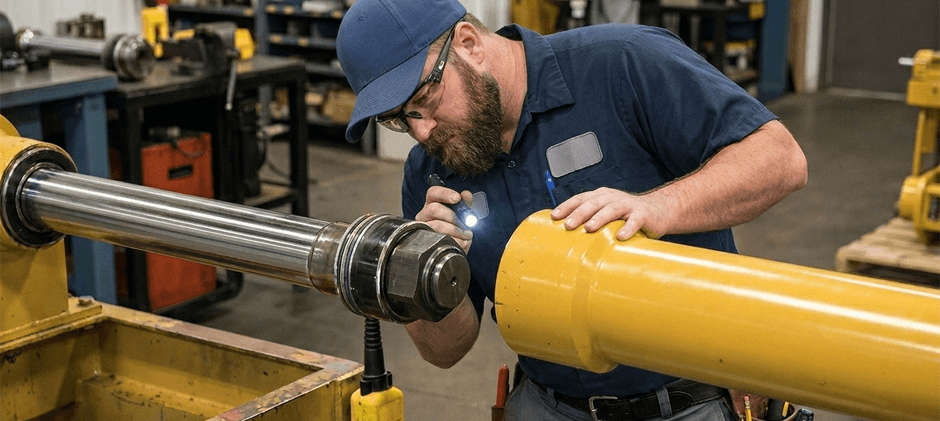
You cannot always tell from the outside, because a cylinder leaking could result from a worn seal, a damaged bore, a scored rod, or a combination. You need to strip the cylinder and examine each component for diagnosis and decide what the repair must address. Here is a short diagnostic sequence:
- Clean and check the exposed rod for score marks, pitting and corrosion
- Inspect the rod for straightness, as a bend of even a fraction of a millimetre will wreck a new seal.
- Strip the cylinder and measure the bore for wear, ovality and scoring.
- Assess the gland, bushes and piston for wear.
Choose to reseal only if the metal passes, and rebuild if it does not.
With the hydraulic cylinder apart and cleaned, you need to check the bore of the barrel, the rod, and the sealing and bearing components. It takes time, but far less time than doing the job twice, and it is the foundation of a lasting hydraulic cylinder repair.
When Does A Hydraulic Cylinder Reseal Suffice?
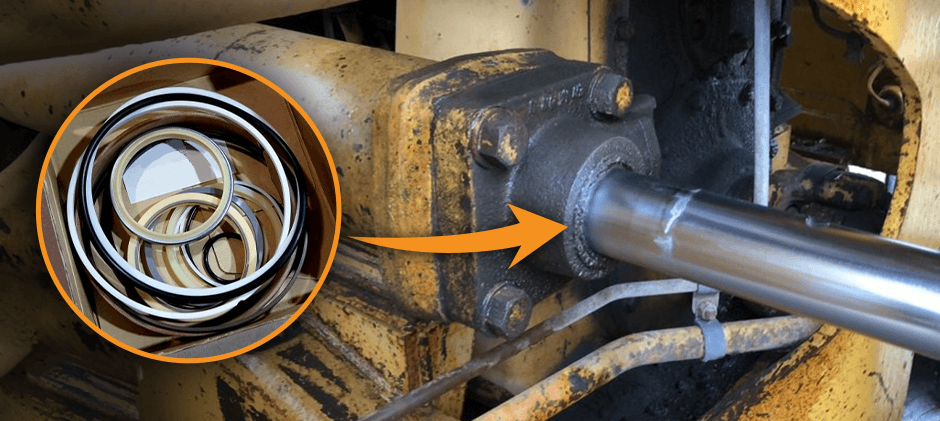
A reseal is the right and economical choice when the bore and rod are still in good condition. Typical signs that a hydraulic cylinder reseal will solve the problem include:
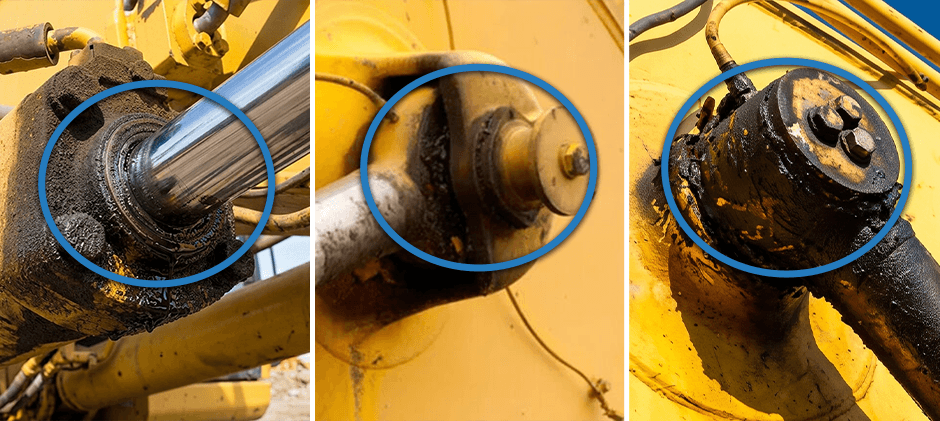
- External oil weeping from the rod as it extends and retracts
- Cylinder creeping or drifting down under load when it should hold position
- Slow or spongy operation caused by fluid bypassing a worn piston seal
- A cylinder that has simply reached the end of normal seal life after years of duty
The golden rule: The metal should be in good condition. If the rod chrome is unmarked, the bore is smooth and true, and there is no measurable bend or scoring, new seals alone will return the cylinder to full service. Contamination often causes the seals to fail early, so if you are resealing your cylinder, it’s worth checking the entire system. Shop for quality hydraulic cylinder seal kits here.
See Related:
Common Hydraulic Cylinder Failures and Easy Fixes
When Does Your Hydraulic Cylinder Need A Rebuild?
Your newly replaced seals can easily fail again if the surfaces they run against are damaged. In this situation, the problem was never the seal. Hence, a full cylinder rebuild could be the right call when you find any of the following:
- Scored, pitted or flaking chrome on the rod, which shreds the rod seal
- A bent or misaligned rod, usually from side loading or an impact
- A worn, oval or scored bore that lets the piston seal bypass
- Worn gland bushes or bearing bands causing the rod to run off-centre
- Corrosion on the rod or internal surfaces
When running into these situations, you may need a full cylinder rebuild. This involves stripping the unit, honing the bore, rechroming or manufacturing a new rod and rebuilding the cylinder to original tolerances.
Hydraulic Cylinder Reseal vs Full Rebuild: Side-by-Side Comparison
The table below shows you clearly the comparison between a cylinder reseal and rebuild. It can help you determine which method of hydraulic cylinder repair you should choose.
| Aspects | Cylinder Reseal | Cylinder Rebuild |
|---|---|---|
| What is replaced | Seals, wipers, O-rings only | Seals, plus honed bore, re-chromed or new rod, bushes, and any worn parts |
| Right when | Leakage only, with all metal components within tolerance | Rod or bore is scored, pitted, corroded, or bent |
| Machining needed | None | Bore honing, rod re-chroming, or manufacturing |
| Turnaround | Shorter, typically a quick bench job | Longer, depending on machining and rod restoration |
| Cost | Lower | Higher, but far more cost-effective than a new cylinder |
| Service life restored | Full, if the diagnosis was correct | Full, restoring the unit to as-new condition |
Conclusion
When you encounter a hydraulic cylinder failure, it’s better to diagnose where the problem is to save on effort and money. Reseal when a cylinder leaks but the rod and bore are in good condition; rebuild when the metal is scored, pitted, corroded or bent. At FridayParts, we provide a vast selection of quality hydraulic cylinder parts, ensuring minimal downtime and reliable performance of your hydraulic systems. Explore our extensive catalog now and enjoy your new rig later.
