

If you’re looking for John Deere 4020 specs for service or parts, this guide puts the key numbers first. Horsepower, weight, dimensions, engine details, and oil and hydraulic capacities are all here. Version differences are also included so you can check them before you fill or order.
John Deere 4020 Quick Specs
Before getting into version differences, it helps to see the main numbers in one place.
| Item | Specification |
|---|---|
| Production years | 1963 to 1972 |
| Tractor type | Row-crop tractor |
| Engine power | 101.3 hp |
| PTO horsepower tested | 95.83 hp |
| Drawbar horsepower tested | 83.79 hp |
| Transmission options | 8-speed Syncro-Range, 8-speed Power Shift |
| PTO type | Independent rear PTO |
| Differential lock | Yes |
| Rear hitch | Category II |
| Rear lift capacity | About 3,790 lb |
| Fuel capacity, gas, and diesel | 34 gal |
| Fuel capacity, LP | 45 gal |
| Hydraulic capacity, Syncro-Range | 10 gal |
| Hydraulic capacity, Power Shift | 12 gal |
| Wheelbase, row-crop | 97.5 in |
| Wheelbase, standard | 100.25 in |
| Length | 151 in |
| Width | 89.6 in |
| Height | About 77.9 in to 88.75 in |
| Weight range | 8,225 to 9,560 lb |
These are the numbers most people look for first when checking the 4020 for service, comparison, or purchase.
Engine and Oil Capacity by Version
Not every John Deere 4020 uses the same engine specs or oil fill. That is where many quick-reference pages fall short. If the goal is accurate maintenance, the engine version needs to be confirmed before adding oil or ordering parts.
Engine Specifications
| Engine type | Displacement | Bore x stroke | Compression ratio | Rated RPM | Starter | Coolant capacity |
|---|---|---|---|---|---|---|
| Diesel | 404 ci / 6.6 L | 4.25 x 4.75 in | 16.5:1 | 2200 | 24 volts | 24 qts / 22.7 L |
| Early gasoline | 340 ci / 5.6 L | 4.25 x 4.00 in | 7.5:1 | 2200 | 12 volts | 24 qts / 22.7 L |
| Late gasoline | 362 ci / 5.9 L | 4.25 x 4.25 in | 7.5:1 | 2200 | 12 volts | 24 qts / 22.7 L |
| LP gas | 362 ci / 5.9 L | 4.25 x 4.25 in | 9.0:1 | 2200 | 12 volts | 24 qts / 22.7 L |
4020 Engine oil capacity
| Engine version | Oil capacity |
|---|---|
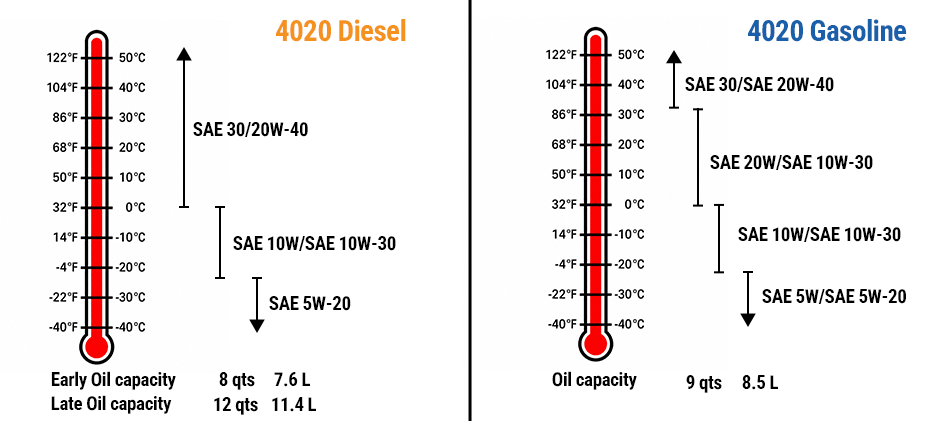
| Early diesel | 8 qts / 7.6 L |
| Late diesel | 12 qts / 11.4 L |
| Early gasoline 340 ci | 9 qts / 8.5 L |
| Late gasoline 362 ci | 8 qts / 7.6 L |
| LP gas 362 ci | 8 qts / 7.6 L |
The biggest service difference is the diesel oil capacity change. On most diesel tractors, capacity increased from 8 quarts to 12 quarts around the 1969 model year, commonly tied to serial number 201,000. High-crop diesel tractors are a known exception and generally remain at 8 quarts.
That is why the safest approach is not to rely on year alone.
If oil capacity numbers do not match across websites, the version of the tractor is usually the reason.
Before refilling engine oil, check these points:
- Confirm the serial number.
- Confirm diesel, gasoline, or LP.
- Confirm whether the tractor is early or late production.
- Check the oil pan currently installed.
- Verify the dipstick reading before final fill.
This step matters because older machines may have updated or replacement parts that change the listed capacity.
Hydraulic Capacity and Oil Type
Once the engine oil capacity is clear, the next question is usually about hydraulic fluid. Transmission type affects capacity, so this should be confirmed before fluid service.
Hydraulic capacity
| Transmission | Hydraulic capacity |
|---|---|
| Syncro-Range | 10 gal |
| Power Shift | 12 gal |
A tractor with Syncro-Range does not use the same hydraulic fluid as one with Power Shift. That difference is easy to miss when checking short spec pages or mixed parts listings.
Common oil type references
For practical service planning, these are common starting points:
- Diesel engine: 15W-40 for general use, or 10W-30 in cooler weather
- Gasoline engine: 10W-30 or 10W-40
The correct oil still depends on climate, operating load, and engine condition. For older tractors, a diesel-rated oil made for working equipment is usually the right direction for diesel models.
If service is already due, it also makes sense to inspect related parts at the same time. A routine fluid change is an ideal opportunity to replace oil filters, fuel filters, hydraulic filters, gaskets, seals, radiator hoses, and the water pump with fresh, high-quality components. This helps prevent small wear items from becoming bigger issues down the road.
Why Specs and Capacities Can Differ?
The 4020 was not built in just one exact form. That is why different sources may show different numbers for oil capacity, weight, or engine details.
The most common reasons include:
- Early vs. late production changes
- Diesel, gasoline, and LP versions
- Row-crop, standard, high-crop, and industrial setups
- Syncro-Range vs. Power Shift differences
- Bare weight vs. equipped weight
- Replacement parts fitted during past repairs
This matters most when checking John Deere 4020 specs for maintenance use rather than general reference. A table can give a starting point, but version details decide whether the numbers truly fit the tractor in front of you.
For quick verification, focus on these four variables first:
- Serial number
- Engine type
- Transmission type
- Tractor configuration
That short check can prevent wrong fluid fills, wrong filter orders, and wasted time during service.
Common Questions
What engine is in a John Deere 4020?
Most diesel versions used a 404 ci 6-cylinder engine. Gasoline versions used either a 340 ci or 362 ci 6-cylinder engine, while LP versions used the 362 ci engine.
How much horsepower does it have?
Commonly listed engine power is 101.3 hp, with tested PTO horsepower around 95.83 hp and drawbar horsepower around 83.79 hp.
How much does it weigh?
Weight usually falls between 8,225 and 9,560 lb, depending on version, tires, ballast, and installed equipment.
How much oil does it hold?
That depends on the engine version. Most early diesel tractors use 8 qts, while most late diesel tractors use 12 qts. Gasoline and LP versions use different oil capacities.
Why do oil capacity numbers differ online?
Most differences come from version changes. Early and late diesel tractors do not use the same fuel, and some tractors may also have service updates that affect capacity.
Final Words
Start by confirming the tractor version. Then check the specs. That order prevents mix-ups with fluid capacities and part numbers. When replacement parts are needed, FridayParts offers solid aftermarket options with fair pricing and wide equipment coverage.
