

If you’re shopping for a compact tractor, you’ve probably seen all the well-known brands. But LS Tractor is blowing up right now, with feature-packed machines at competitive prices. You might be asking whether there is a downside to the competitive price tag? We read lots of owner feedback, forum talks and customer reviews to give this honest, straightforward LS Tractor review. This guide will cover what LS tractors feature, their real pros and cons from actual use, and how they compare to big brands like Kubota. By the end, you’ll know if an LS tractor fits what you need for your farm work.
What Is LS Tractor?
LS Tractor is a tractor brand from South Korea, and it’s gotten really popular all over the world. A lot of people in North America think it’s a new brand, but the company making these tractors has been making farm equipment for ages.
Who Makes LS Tractors?
LS Mtron makes all LS tractors, and it’s part of LG Group, a huge South Korean company. Before they sold tractors under their own LS name, LS Mtron spent years building tractors for big brands like New Holland, Case IH and McCormick. All that contract work let them perfect their engineering and production lines long before they started selling LS tractors in the US. That background is why their machines are tough and reliable.
Where Are LS Tractors Made
LS’s main factory is in Daegu, South Korea. This modern plant churns out all their tractors for global sales. They also have an assembly shop in Battleboro, North Carolina just for North American buyers. Tractors get put together and tweaked there to fit local farming needs before shipping out to dealers.
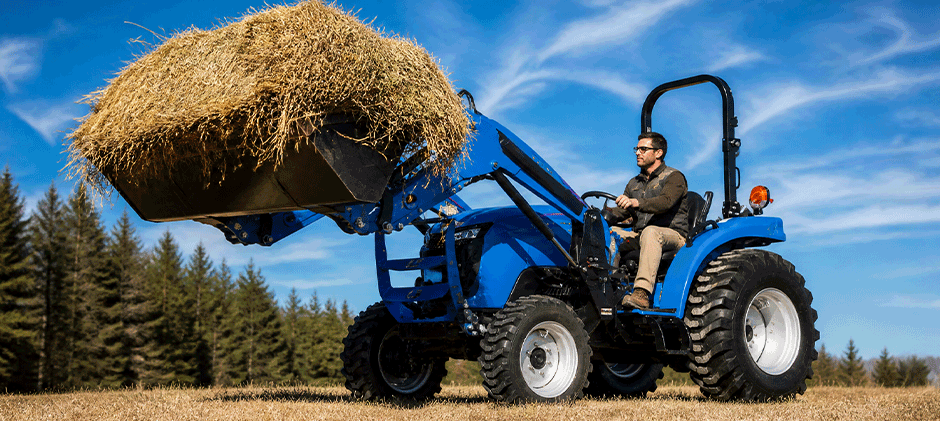
LS Tractor Advantages
Lots of LS tractor owners love their machines, and the biggest advantage by far is how much bang you get for your buck.
- More Features for the Price: More Features for the Price: This is what almost every buyer talks about first. LS throws in upgrades that cost extra on other tractor brands as standard gear. You get self-leveling front loaders, an external rear lever to control the three-point hitch, and comfy air suspension seats. These extras make working faster and way more pleasant without paying extra.
- Strong performance for all farm jobs: No matter which horsepower LS model you pick, owners say they pull their weight really well. Folks use these tractors for tough work: dragging heavy tillage tools through rock-hard compacted dirt, hauling 1,000-pound round hay bales, and running power-heavy gear like hay balers with zero struggles.
- Practical Design: Many owners appreciate the small but significant design choices. Examples include high-mounted exhaust systems that prevent scorching dry grass or hay during baling, a smooth underbelly that avoids snagging, and excellent LED lighting packages for working after dark.
- Reliable Engines: LS fits their tractors with well-known engine brands. Most run Mitsubishi motors or LS’s own in-house engines; certain models use Shibaura or Iveco engines too. Mitsubishi has parts stores all over the world, so tracking down replacement engine parts is never a hassle.
- Low maintenance, long-lasting reliability: People who’ve owned LS tractors for years say they barely run into issues as long as you stick to regular oil filter changes and routine maintenance. One user shared on a forum that his 11-year-old LS tractor still runs perfectly after years of hauling firewood and clearing snow all winter.
LS Tractor Disadvantages
LS tractors offer great value, but there are common downsides anyone shopping for one needs to know. These are the compromises you often get with their competitive price tag.
- Smaller dealer network & slower parts access: This is the biggest complaint. LS doesn’t have nearly as many local dealers as big brands like John Deere or Kubota. If your dealer doesn’t stock a certain part, you could wait weeks to get it shipped in. Basic wear parts such as filters and hydraulic pieces are easy to find from aftermarket suppliers, but unique brand-specific parts are tough to source quickly.
- Shoddy small plastic parts on older tractors: Lots of reviews for older LS models mention tiny, annoying flaws. These include plastic components on door handles cracking, rearview mirrors that vibrate excessively, and a lack of standard features like a toolbox or a cup holder. Many of these issues appear to have been addressed in newer models.
- Design flaws: A few design choices leave owners frustrated. One common issue is the stationary PTO shaft guard — it can’t lift up, so hooking up farm attachments is awkward, and it scrapes your wrist easily. Another complaint is that some tractor buckets are overly wide for the machine’s frame. Digging heavy dirt with them puts extra strain on the whole loader setup.
- Frequent Regen Cycles on Older Tier 4 Models: Owners with early Tier 4 LS tractors built between 2014 and 2017 say the exhaust regen process kicks in as often as every four working hours. It’s not a broken part, but it’s super annoying if it starts mid-job right when you’re almost finished. Newer LS tractors fixed this issue big time; regen now only runs every 30 to 40 hours of use.
LS Tractor vs Kubota: What Is the Difference?
You’ll see online arguing over LS vs Kubota tractors. LS is built in South Korea, while Kubota’s made in Japan, and both make solid machines. Here’s a plain breakdown of their main differences:
Value vs Well-Known Brand Name
- LS’s main selling point is unbeatable value. Take a 40-horsepower cab tractor for example: all the handy add-ons that cost thousands extra on an equivalent Kubota come standard on LS. You get way more built-in features for every dollar you spend.
- Kubota’s strengths are its famous brand, decades of trusted performance, and higher resale prices when you want to sell later.
Dealer & Parts Service
- This is where Kubota clearly pulls ahead. They have a huge, well-established network of local dealers. It’s easy to get replacement parts and quick service anywhere you go.
- A great LS dealer can ease this hassle, but Kubota’s massive dealer footprint gives most buyers a lot more peace of mind.
Features
Like we talked about earlier, LS packs their tractors full of extra gear. If you line up two models that cost roughly the same, LS will almost always have more perks listed on the spec sheet.
Brand History & Reputation
LS Mtron has manufactured tractors for many years, but Kubota has been popular in North America far longer. That long-standing local reputation is one big reason Kubotas hold their value so well when reselling.
The choice often comes down to a trade-off: are you willing to accept the potential risk of a smaller dealer network to get more features for your money?
What Should You Check Before Buying an LS Tractor?
If you’re thinking about picking up an LS tractor, you need to do your research first. Here’s everything you need to look into:
- Check out your local LS dealer in person: Head down to the dealership and chat with the team. Ask them what common replacement parts they keep in stock, and how long you’ll wait if they have to order parts they don’t have on hand.
- Go over the warranty details: If you’re buying a used LS tractor, confirm whether the leftover warranty can be passed on to you. Some warranties only cover the person who originally bought the machine, so this is super important to double-check.
- Look over the exact tractor model you want: Keep an eye out for those small flaws we talked about in user reviews. Check if the plastic trim and handle pieces feel flimsy. See if the PTO guard lifts up easily. Check if it comes with a factory toolbox and cup holders. LS keeps updating their tractors based on customer feedback, so newer models fix most of these little annoyances found on older units.
Conclusion: Are LS Tractors Worth Buying?
Based on owner feedback, LS tractors can be a good choice if you have good local dealer support. They offer reliable performance, useful features, and good value for the money. The main thing to consider is the smaller dealer network, especially when you need service or replacement parts. FridayParts is here. We stock all kinds of replacement parts for LS tractor models to cut down your machine’s downtime.
FAQs
Are LS Tractor and New Holland Workmaster parts interchangeable?
Some parts may share the same casting and can be interchangeable, but not all. It has been noted by owners that LS-branded parts are often significantly cheaper than the equivalent New Holland part.
Why do LS Tractor parts sometimes take weeks to arrive from the dealer?
LS has far fewer local dealers and regional warehouses compared to bigger tractor brands. That means even common wear parts like filters, relays, and hydraulic components often have to be special-ordered from a central warehouse, which causes long wait times. Aftermarket suppliers usually have these parts in stock and ship much faster.
What engines do LS tractors use?
LS uses different engines depending on the tractor model. Most smaller LS tractors run on Mitsubishi engines. Other models come with LS Mtron’s own engines, or motors from Shibaura and Iveco. Mitsubishi engines are common worldwide, so their replacement parts are generally easy to find.
