

When we spot oil on a rod, see a bucket drifting down, or feel a boom getting weak, a hydraulic cylinder leaking moves from “small mess” to “real downtime” fast. The good news: most leaks follow a short list of causes, and we can narrow them down with a few checks before we waste time swapping the wrong parts. Below, we’ll break down why cylinders fail on off-road machinery, how to repair leaks the right way, which parts to inspect first, and how to prevent repeat leaks on the next job.
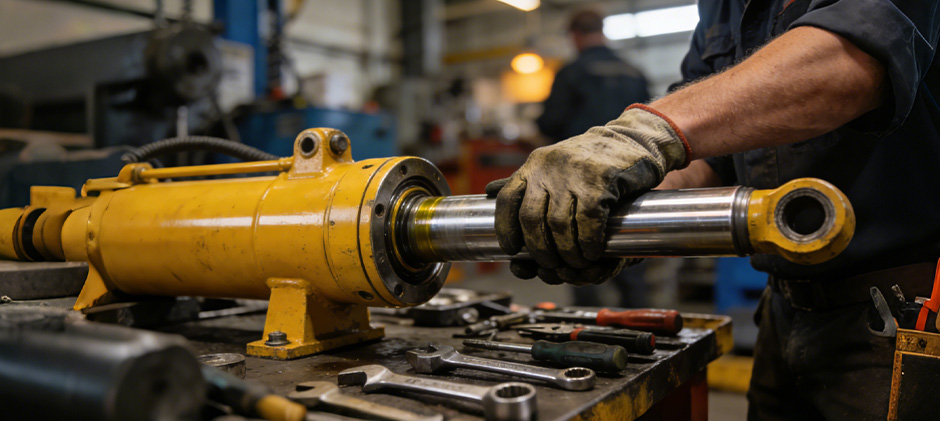
What Causes a Hydraulic Cylinder to Fail?
A hydraulic cylinder turns fluid pressure into a straight-line force. On off-road machinery—loaders, excavators, backhoes, telehandlers, forklifts, tractors—cylinders live in dirt, impact, vibration, and side-load. Failure usually shows up as a hydraulic cylinder leaking, loss of force, or uncontrolled movement.
1) Seal wear
Most external leaks start at the gland area (rod seal) or at the wiper. Internal leaks often come from piston seal wear.
What pushes seals to fail early:
- Heat from high duty cycles (hot oil thins, seals harden faster)
- Dirty oil (abrasive particles cut seal lips)
- Dry starts after long storage
- Incorrect fluid type or neglected oil changes
What we see: wet rod, oil around the gland, seepage that turns into drips, or internal leakage that causes drift.
2) Contamination
Contamination is a “multiplier problem.” One bad wiper or damaged rod finish lets grit in; grit damages the rod seal; seal wear creates more debris; debris damages the piston seal; now we have both external leak and internal leakage.
Field clue: seals get replaced, but the leak returns quickly. That’s usually oil cleanliness, not “bad luck.”
3) Rod damage: scratches, pits, rust, or bends
Even a small nick on the rod can slice seals with every stroke. A slightly bent rod adds side-load and accelerates wear bands and seals.
What we see: a line of oil on the rod, “wiping” marks, uneven seal wear, or chatter during extension.
4) Side-loading and misalignment
Cylinders are meant to push/pull in line. When we use a bucket edge to pry, carry loads off-center, or run with worn pins/bushings, the rod is forced sideways. This eats wear bands, opens clearances, and leads to hydraulic cylinder leaks and scoring.
What we see: seals fail early, the rod shows uneven polish marks, and barrel wear shows up on one side.
5) Overpressure and pressure spikes
Relief valves set too high, stuck valves, or shock loads can blow out seals or crack hardware. Even if the cylinder survives, repeated spikes shorten seal life.
What we see: sudden leak onset after a hard event, rapid seal extrusion, fittings weep after impact.
6) Barrel wear/scoring or physical damage
- If the tube is scored inside, the seals can’t hold pressure well. If the tube is dented or cracked, leaks may show at the body.
What we see: poor holding power, drift, or metal in the oil after a long period of weak performance.
How to Repair a Hydraulic Cylinder Leak?
Repair starts with one decision: is this an external leak we can see, or an internal leakage we need to confirm? The steps differ, and guessing wastes time.
Step 1: Identify external vs internal leakage
External leak signs
- Oil at the rod/gland area
- Oil around ports, hoses, or fittings
- Oil collecting on the cylinder body or under the machine
Internal leakage signs
- Cylinder drift (boom/bucket slowly moves under load with controls neutral)
- Weak force (stalls early even with correct system pressure)
- Slow movement that improves briefly after cycling (pressure “builds,” then fades)
If we suspect internal bypass, follow a repeatable test method rather than “it feels weak.” This guide is useful for a structured check: How to Check If a Hydraulic Cylinder Is Leaking Internally?
Step 2: Make the machine safe and get clear evidence
- Park on stable ground, lower attachments, relieve pressure
- Lockout/tagout if required
- Clean the cylinder area before inspection (oil attracts dust and hides the source)
A clean cylinder tells the truth. A dirty one just looks guilty.
Step 3: Fix the leak at the right level
Here’s a practical decision path we can use:
- Leak at fittings/hoses/ports: tighten to spec, replace damaged fittings or hoses, inspect threads and sealing surfaces.
- Leak at gland/rod seal: plan a reseal—but inspect rod finish first. A damaged rod will ruin a new seal quickly.
- Drift / internal bypass: reseal piston, inspect wear bands, inspect barrel for scoring.
- Repeat failures: stop and address contamination, alignment, and pin/bushing wear.
Step 4: Rebuild vs replace
Sometimes resealing is smart. Sometimes replacement is cheaper than repeated downtime. If you want a clear decision framework (downtime, labor, damage level), use this repair-or-replace guide: repair or replace decision guide.
Step 5: Use correct-fit parts and verify after assembly
Mid-job is a good time to source correct-fit heavy equipment parts instead of “close enough” options. If we’re replacing a full unit, this category helps narrow by application: hydraulic cylinder.
After repair/replacement:
- Bleed air as required by the machine procedure
- Cycle slowly at low load first
- Recheck for seepage and verify holding power (no cylinder drift)
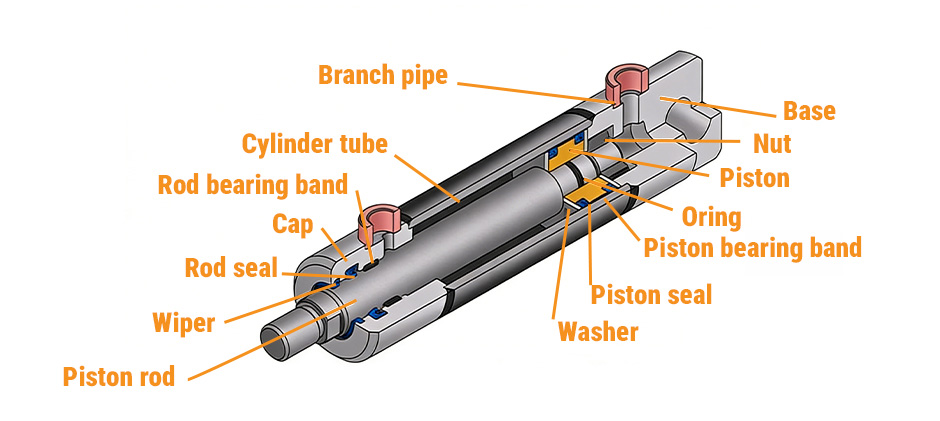
Important Parts of Hydraulic Cylinder to Check
When hydraulic cylinder leaking starts, we get faster answers by inspecting the usual failure points in order. The list below is also a good checklist to hand to a tech before teardown.
1) Wiper seal
- Look for torn lips or packed grit
- If the wiper fails, rod seal failure often follows
2) Rod seal
- Check for oil at the gland
- Check for heat hardening, cuts, or extrusion marks
3) Piston seal
- If the cylinder drifts, the piston seal is a prime suspect
- Also, inspect wear bands; worn bands let metal contact start
4) Piston rod
- Run a fingernail test for nicks
- Look for rust pitting (pits act like tiny blades)
- Check straightness if you see uneven wear patterns
5) The tube/barrel
The barrel must stay smooth and round for seals to hold pressure. If it’s scored, cracked, or worn, resealing alone may not hold for long.
For barrel-related replacements and rebuild paths, this category is useful: cylinder barrel.
6) Mounts, pins, and bushings
A cylinder can be “fine,” but worn linkage can side-load it to death. If we reseal without fixing the play, we often see the same leak again.
7) Related wear items and rebuild parts
If we’re already opening up a machine for a major service window, it can be efficient to stage other correct-fit components that commonly get replaced during heavy equipment maintenance. This catalog is a broad place to start when planning parts: cylinder components.
Tips for Preventing Future Leaks
Preventing hydraulic cylinder leaking is mostly about oil cleanliness, alignment, and protecting sealing surfaces. The goal is not “never leak,” but “long service life with predictable maintenance.”
Maintenance habits that pay off
- Keep rods clean: wipe mud and salt residue off rods before storage when possible
- Watch operating temperature: hot oil speeds seal aging
- Fix small seepage early: light weep + dust = abrasive paste
- Control contamination: service filters on time; keep fill ports clean
- Avoid side-load behavior: don’t pry with the bucket at full reach; avoid pulling loads that twist the linkage
- Check pin/bushing play: sloppy joints create seal-killing misalignment
Quick “leak triage” table
| What we notice | Likely cause | What we do next |
|---|---|---|
| Oil line on the rod near the gland | External leak at the rod seal, rod nick, bad wiper | Clean, inspect rod finish, reseal if rod is good |
| The cylinder slowly drifts under load | Internal leakage past the piston seal or the control valve leak | Isolate/test; confirm cylinder vs valve issue |
| Seals fail again soon after rebuild | Contamination, side-load, barrel scoring | Check oil/filters, alignment, wear bands, tube condition |
| Sudden heavy leak after a shock event | Pressure spike, seal extrusion, cracked fitting | Inspect relief settings, fittings, and seal condition |
| Weak force + heat | Bypass + friction + dirty oil | Pressure/flow checks, oil condition check, internal inspection |
How to Prevent Hydraulic Cylinder Leaks?
To keep this practical, here’s a program that fits most fleets—whether we run one skid steer or a mixed lineup of loaders and excavators.
1. Daily/weekly walk-around
- Check the rod area for fresh oil
- Listen for chatter and watch for uneven motion
- Look for hose rub points and fitting seepage
2. Monthly cleanliness checks
- Inspect wipers and rod condition
- Track oil appearance changes (darkening, burnt smell, visible particles)
3. Scheduled hydraulic service
- Change filters at the machine interval
- Sample oil if the machine runs high hours or harsh conditions
4. Operator habits
- Reduce side-load moves where possible
- Don’t hold against relief longer than needed
- Warm up before heavy cycles in cold weather
Final Thoughts
If hydraulic cylinder leaking is already costing us time, the fastest win is a clean diagnosis and correct-fit parts the first time. FridayParts is an aftermarket parts supplier with high-quality products at affordable prices, a vast inventory, and wide compatibility for many heavy equipment brands—helpful when we need to match cylinders, barrels, or service parts to the exact machine and application without long delays.
