

Fuel polishing may sound familiar to fleet owners and marine operators. But for farmers, it is rarely the first thing that comes to mind. Modern diesel, with its blend of low-sulphur fuel and biodiesel, has made fuel management more complex than ever before. So, is polishing something farmers actually need? Or is it simply overkill? This guide gives you a straight answer.
What Is Fuel Polishing?
Fuel polishing is a process of cleaning contaminated fuel by circulating it through a multi-stage filtration system. It targets at removing water, sediment and microbial growth without draining and replacing all the fuel. This is especially important for industries that rely on diesel fuel, including agriculture, trucking, and manufacturing. For example, a trucking company that stores large volumes of diesel on-site may not use the fuel quickly enough to prevent it from becoming contaminated. Similarly, farm equipment that sits idle for months at a time is vulnerable to condensation and microbial growth. By polishing fuel, operators can protect their engines, reduce maintenance issues, and make sure their investment in stored fuel doesn’t go to waste.
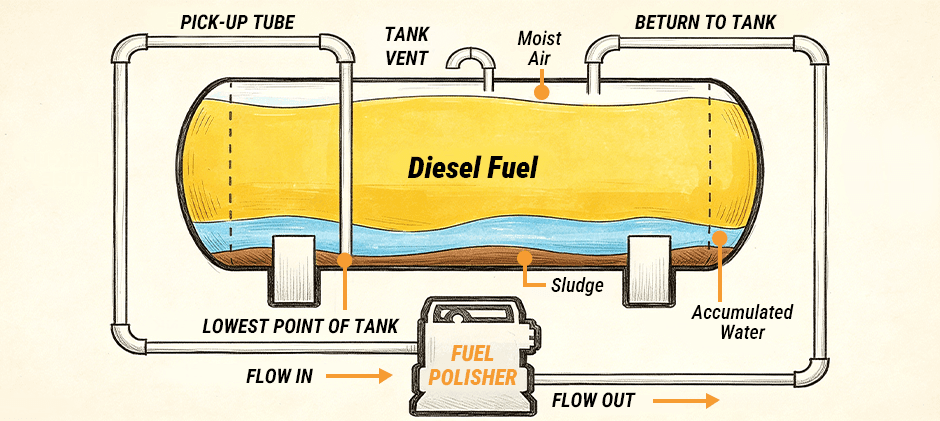
How Does Fuel Polishing Work?
Polishing diesel fuel is a 1-to-8-hour process, depending on the tank size and contamination level. The process involves:
- Drawing fuel out of the fuel tank through an inlet pipe
- Removing free water from the fuel using a water separator
- Removing finer sediment, rust particles and microbial matter with finer filters
- Get clean, polished fuel back to the tank through a separate line
- The fuel circulates through this loop multiple times until the contamination level falls to an acceptable threshold
Click here to see How Water Gets into Fuel & How to Remove It Yourself?
Why polish fuel?
Over time, the stored fuel can develop a large amount of sludge, sediment and water caused by microbial contamination. If left untreated, the contamination worsens to damage the machinery, pumps and engines. Fuel contamination is likely to appear due to condensation, air absorption, and a faulty tank. Microbes like bacteria, moulds and fungi may find their way into fuel and cause problems as they multiply in size every 20 minutes.
Who Actually Uses Fuel Polishing?
Fuel polishing is standard practice in industries where large volumes of fuel sit stored for long periods and downtime is simply not an option — think commercial shipping, marine vessels, backup generators, and large transport fleets. What these users have in common is significant: high fuel storage capacity, extended periods of inactivity, and extremely high costs if something goes wrong. For a ship at sea or a hospital backup generator, a fuel system failure is a serious emergency.
But does that same logic apply to a farm? A tractor’s fuel use pattern, storage scale, and risk profile look quite different. And that difference matters when deciding whether polishing the diesel fuel is worth the investment.
When Might a Farmer Need Fuel Polishing
If you are a farmer, choose it when:
- You run a very large-scale farm and stock large high-value fuel inventories
- Polishing can reduce the downtime financial risk before equipment demand spikes during planting, harvest or irrigation seasons
- You encounter repeated diesel bugs, clogged filters & injectors
- Polishing is most effective when contamination is confirmed through testing
When Fuel Polishing Is Often A Waste of Money
However, fuel polishing can also be overkill when:
- You just schedule it annually without testing or diagnosis and unnecessary fuel handling can actually introduce new contaminants without tight controls
- Polishing treats symptoms, not causes and the contaminants come back quickly if water ingress, condensation or poor tank maintenance remains unaddressed
- Your fuel is oxidized or degraded and polishing cannot reverse the chemical degradation
- An easy alternative solution may suffice
What Farmers Can Do Instead
A good maintenance is a good solution. As a farmer, it is important to develop these good habits of fuel management:
- Keep the fuel tank tightly sealed and the fuel fresh and full
- Regularly change fuel filters and fuel
- Apply appropriate biocide on a regular basis
- Use fuel from reliable suppliers
- Monitor and catch early signs of the diesel bug
Signs Your Fuel May Need Polishing
Water is one of the biggest enemies of fuel, often building up in your tank without you even realizing it. These are the signs it’s time to polish your tractor fuel.
- Water Accumulation: Presence of water in the fuel, which can lead to microbial growth
- Darkened Fuel Color: Indicates oxidation and degradation of fuel quality
- Residue Buildup: Sediment or sludge in the tank suggests contamination that can clog filters and damage engines
If any of these signs are present, it’s advised to conduct fuel testing and consider polishing to restore fuel quality.
Key Factors to Consider About Polishing Your Fuel
Costs and benefits are two factors farmers should take into consideration. The cost of fuel polishing varies based on tank size, contamination severity, required filtration levels, accessibility and location. While pricing differs regionally, polishing is rarely inexpensive. For smaller tanks, the cost can exceed the fuel itself. As we said above, you should choose it when it pays off. That means this polishing practice delivers value only if it prevents injector or pump damage, equipment downtime and fuel disposal & replacement. If these risks are low, the return on the polishing is equally low.
Wrapping Up
Polishing tractor fuel removes water, sludge and contaminants to restore fuel quality and prevent engine damage. However, is it really worth polishing fuel for farmers? For most small to mid-sized farms with good fuel habits, polishing the fuel is not necessary. But if you are running a large operation, storing high volumes of diesel over long periods, or dealing with repeated diesel bug problems, it is worth serious consideration. The key is whether your situation actually calls for it. At FridayParts, you can get up-to-date information on tractor troubleshooting, repairs, and maintenance through our blogs. And we also provide an extensive inventory of high-quality tractor replacement parts to keep your tractor running at its best performance.
